
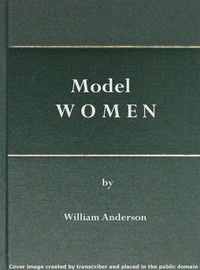
Model Women by William Anderson
Published in 1850, Model Women is William Anderson's collection of biographical sketches. He presents a gallery of women from various eras and walks of life, united by what he considers their exemplary character. The book is divided into sections like 'Women of Piety,' 'Women of Philanthropy,' and 'Women of Patience.'
The Story
There's no single narrative. Instead, Anderson acts as a guide, introducing us to one historical or biblical figure after another. You'll meet famous names like the courageous martyr Anne Askew and the learned Queen Margaret of Scotland, alongside lesser-known figures and characters from the Bible like Hannah and Ruth. For each, Anderson tells their life story with a clear purpose: to point out the specific virtues—like faith, courage, charity, or devotion—that made them, in his eyes, a 'model' to be followed.
Why You Should Read It
This book is a fascinating artifact. Reading it feels like sitting down with a very earnest, well-meaning Victorian gentleman who is desperate to share his idea of a good example. His perspective is firmly of its time, which is exactly what makes it interesting. You see the values of 19th-century society laid bare: intense religious faith, moral duty, and quiet strength are paramount. It’s not a modern feminist text, but within its own framework, it does acknowledge and celebrate female intelligence, resilience, and influence. It made me appreciate how the definition of a 'role model' is never neutral—it always reflects the priorities of the culture defining it.
Final Verdict
This is a niche but rewarding read. It's perfect for history buffs, students of Victorian culture, or anyone interested in the history of how society views women. It's not a page-turning drama, but more like a series of historical portraits. Go in knowing it's a product of its time, and you'll find a thoughtful, if dated, celebration of women's moral and spiritual power. If you enjoy primary sources that let you listen directly to the past, Model Women offers a clear and sincere voice from 1850.
You are viewing a work that belongs to the global public domain. It serves as a testament to our shared literary heritage.
Nancy Jones
3 months agoAs a professional in this niche, the language used is precise without being overly academic or confusing. A perfect balance of theory and practical advice.
Christopher Lee
9 months agoIf you're tired of surface-level information, the quality of the diagrams and illustrations (if applicable) is top-notch. I'm glad I chose this over the other alternatives.
Jennifer Martinez
1 year agoI started reading this with a critical mind, the objective evaluation of the pros and cons is very refreshing. It cleared up a lot of the confusion I had previously.
Patricia Rodriguez
1 year agoComparing this to other titles in the same genre, the language used is precise without being overly academic or confusing. Top-tier content that deserves more recognition.

Robert Jones
1 year agoI found the data interpretation to be highly professional and unbiased.