About 211 minutes
The Early Short Fiction of Edith Wharton — Part 2 — Reading Companion
Wandering Heroes Classic Adventures
48,432 recorded words. 3 minutes difference from this book's estimate.
View Gutenberg source #306
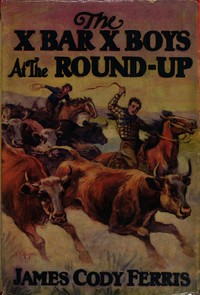
The X Bar X boys at the round-up — Story, Setting & Ideas can be approached with a clearer sense of reading commitment from its source measurements: 47,790 words, 3 hr 28 min estimated reading time, and 37 detected text sections.
The text analysis averages about 11.1 words per sentence, while the detected sections provide another way to judge how the source is divided.
Project Gutenberg metadata also associates the work with “Western stories,” connecting these edition facts with the source record’s subject description.
Explore this collection
These alternatives are selected using recorded categories and estimated reading time.
About 211 minutes
Wandering Heroes Classic Adventures
48,432 recorded words. 3 minutes difference from this book's estimate.
View Gutenberg source #306About 213 minutes
Wandering Heroes Classic Adventures
48,878 recorded words. 5 minutes difference from this book's estimate.
View Gutenberg source #77111About 214 minutes
Wandering Heroes Classic Adventures
48,999 recorded words. 6 minutes difference from this book's estimate.
View Gutenberg source #134Search stored excerpts and compare books → Choose by your preferences →
Choices use stored catalog measurements. Estimates vary with reading speed. A shared category is a catalog label, not a claim that two books have the same argument or literary quality.
Search reads excerpt text stored with this catalog and links to its associated Gutenberg record. The connection is stored in the site database; this tool does not recheck that every excerpt is word-for-word identical to that external record. Excerpt search does not cover every chapter and does not verify historical publication dates.
Catalog snapshot checked: 2026-09-25. Coverage: 98 public books, 98 available source excerpts.
Calculated from edition completeness, EPUB availability, text structure and catalogue metadata. Not a user rating.
Total of 100 points, scaled to a 2.5-5.0 range. Editions with an empty description or a missing EPUB file are not scored.
Public-domain source text
The source text is kept in the dedicated reader, separate from this catalogue record and its commentary.
The opening chapter of The X Bar X Boys at the Round-Up establishes a pattern of movement and observation that runs through the entire narrative. Roy and Teddy Manley halt their ponies to study a distant dust cloud, and their exchange—"Coming?" / "Going"—immediately sets up a dynamic of interpretation and action. The brothers do not simply ride; they read the landscape for signs of trouble, especially as the round-up approaches. This attention to the horizon, to the speed and direction of riders, and to the meaning of dust, recurs throughout the excerpts, making the physical setting an active participant in the plot.
The narrative frequently shifts between the wide, sun-drenched plains and more confined, secretive locations. The brothers begin on an open range, but soon move to the porch steps, the bunkhouse, and the office—spaces where information is exchanged and plans are made. The map drawn in the dust by Pop is a striking example: a temporary, outdoor diagram that translates the vast geography into a tactical sketch. This alternation between sweeping vistas and intimate, enclosed settings mirrors the boys' need to gather intelligence before acting. The round-up itself, when it finally begins, becomes a large-scale movement that brings together many of these earlier, smaller spaces.
Certain objects and images appear repeatedly, linking scenes across the narrative. The dust cloud of the opening chapter is echoed later in the description of a rider "burning up the ground." Roy's knife, mentioned in the table of contents and discussed in the excerpts, becomes a plot point tied to overheard conversations. Ropes are another recurring element: chapter titles like "Roy's Rope" and "The Flying Hat" suggest that lassoing is not just a skill but a narrative device. These concrete, tactile items ground the story in the physical world of the ranch, while also serving as clues and tools for the brothers' investigations.
The excerpts show that much of the plot is advanced through dialogue, often in the form of question-and-answer exchanges. Roy and Teddy's conversations are marked by a pattern of one brother making a statement and the other challenging or expanding it. For example, when Roy says a rider is "going," Teddy counters with a joke about Sunday-school. This back-and-forth not only reveals their personalities—Roy more serious, Teddy more playful—but also moves the investigation forward. Later, their questioning of Pop about the Jarmey place is a model of information-gathering: they ask specific questions, receive detailed answers, and then use that knowledge to plan their next move.
The round-up itself is less a single event than a looming deadline that gives urgency to the brothers' actions. From the first chapter, Roy mentions that "with round-up so near, this is no time for fooling." The countdown to the round-up structures the narrative, with each chapter bringing the boys closer to the event. The excerpts suggest that the round-up will involve driving cattle, corralling them, and possibly confronting rustlers. However, the text does not reveal the outcome; instead, it builds anticipation through references to the start of the round-up (Chapter XVI) and subsequent chapters like "Driving In" and "Into the Corral." The round-up functions as both a practical goal and a narrative destination.
Readers approaching this book should pay attention to the way the brothers' observations and conversations build a picture of the threat they face. The landscape is not just a backdrop but a source of clues, and the recurring images of dust, knives, and ropes are worth tracking. The narrative moves deliberately, alternating between action and discussion, and the round-up provides a clear focal point. By noting how the story shifts between open range and enclosed spaces, and how dialogue reveals character and plot, a reader can appreciate the craft behind this western adventure.
Rereading the X Bar X brothers as they ride between the open plains and the closed corral, I found myself thinking about how spaces shape what we say. It’s not a stretch, really, to recall how Shakespeare and the Emblem Writers an exposition of their similarities of throught and expression, preceded by a view of emblem-literature down to A.D. 1616 — Context and Discussion also treats every clearing as a stage for a different self. Just a quiet echo of that old habit.
Capture what you thought, learned, and would like to remember.