About 291 minutes
Pud Pringle, pirate — Text and Context
Wandering Heroes Classic Adventures
66,782 recorded words. 77 minutes difference from this book's estimate.
View Gutenberg source #75936
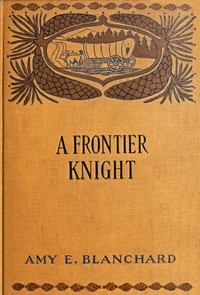
The source record for A frontier knight — A Closer Reading measures this digital text at 84,433 words, 6 hr 8 min estimated reading time, and 24 detected text sections.
The text analysis averages about 15.4 words per sentence, while the detected sections provide another way to judge how the source is divided.
Project Gutenberg metadata also associates the work with “Western stories,” connecting these edition facts with the source record’s subject description.
Explore this collection
These alternatives are selected using recorded categories and estimated reading time.
About 291 minutes
Wandering Heroes Classic Adventures
66,782 recorded words. 77 minutes difference from this book's estimate.
View Gutenberg source #75936About 259 minutes
Wandering Heroes Classic Adventures
59,495 recorded words. 109 minutes difference from this book's estimate.
View Gutenberg source #437About 245 minutes
Wandering Heroes Classic Adventures
56,299 recorded words. 123 minutes difference from this book's estimate.
View Gutenberg source #76812Search stored excerpts and compare books → Choose by your preferences →
Choices use stored catalog measurements. Estimates vary with reading speed. A shared category is a catalog label, not a claim that two books have the same argument or literary quality.
Search reads excerpt text stored with this catalog and links to its associated Gutenberg record. The connection is stored in the site database; this tool does not recheck that every excerpt is word-for-word identical to that external record. Excerpt search does not cover every chapter and does not verify historical publication dates.
Catalog snapshot checked: 2026-09-25. Coverage: 98 public books, 98 available source excerpts.
Calculated from edition completeness, EPUB availability, text structure and catalogue metadata. Not a user rating.
Total of 100 points, scaled to a 2.5-5.0 range. Editions with an empty description or a missing EPUB file are not scored.
Public-domain source text
The source text is kept in the dedicated reader, separate from this catalogue record and its commentary.
The novel opens with Alison, a girl sitting motionless on a low stool, caught in a "brown study" about leaving her Kentucky home. Her sister Christine finds her miles away in thought. Alison contrasts the predictable comforts of Aunt Miranda's house—"hot rolls for breakfast on Wednesdays and Saturdays, cold bread on Mondays"—with the unknown adventure of Texas. She decides to join Christine and John, setting the stage for a story about choosing risk over routine.
The opening chapter establishes Alison's internal conflict through concrete domestic details. She imagines a life where "every chair set at exactly such an angle" and "never any excitement." Christine, though duty-bound to plead Aunt Miranda's goodness, clearly wants Alison to come. The sisters' bond is central: Alison cannot bear separation, even for a secure inheritance. The decision is made without fanfare—"I am going with you and John"—but the weight of it is clear. The excerpt shows Blanchard using small, specific observations to convey character: Alison's longing for adventure, Christine's quiet support, and the oppressive order of the Kentucky home.
Later in the book, a raffle determines Louisa's husband. The scene is tense and theatrical. Louisa insists on using her father's old hat, cuts slips of paper herself, and is blindfolded by Hannah Maria. The men—Jabez, Pike, Ira—react with nervous coughs and impatient sighs. Louisa "lingered so long" before drawing the winning number, and the text hints at a hidden duplicate slip in the hat's lining. The result is twenty-seven, Ira's number, and Louisa "dashed the remaining slips into the flames." The episode blends frontier custom with covert agency: Louisa manipulates the outcome while appearing to submit to chance.
Blanchard gives each character a distinct speech pattern. Pike Smith speaks in a "stentorian voice"; old Jabez smirks and says, "Might as well give ’em their own gait till you want to drive ’em double." Ira frowns but says little. Hannah Maria, described as "fat, good-natured, sentimental," is the first to rush up with congratulations. The dialogue carries the plot forward while revealing social dynamics: the men jostle for position, Louisa steers events, and the community watches. Even minor lines, like Cyrus's sharp "Hurry up, Lou," add tension. The raffle scene depends on these voices to create a crowded, noisy room where every word matters.
The opening describes "level sweeps of blue-grass meadow-land" and sunlight making "squares of brightness on the whitewashed walls." This orderly Kentucky landscape contrasts with the Texas frontier, where Christine will be left "alone in our little cabin" amidst strangers. The novel's title, A Frontier Knight, and chapter headings like "Off to the War" and "A Norther" suggest that setting is not just backdrop but an active element. The Mexican War (1846–1848) looms as a historical context, though the excerpts focus on domestic and social scenes. The raffle takes place by a fireside, with flames casting "a bright glow" on Ira's face—a small but vivid image of frontier community life.
Readers should note that the excerpts cover only the opening and a middle chapter. The raffle scene shows Blanchard's skill with ensemble dialogue and covert character agency, while the opening establishes a clear thematic contrast between security and adventure. The sibling bond between Alison and Christine, and the resourcefulness of Louisa, suggest that the novel may explore how women navigate frontier constraints. The remaining chapters, with titles like "A Clue" and "Sir Knight," promise further developments in the Texas setting.
Create a short personal record of your experience with this book.