
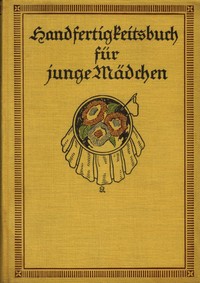
Handfertigkeitsbuch für junge Mädchen : Eine Anleitung für geschickte…
This isn't a novel with a plot in the traditional sense. Handfertigkeitsbuch für junge Mädchen is a practical guide. It's filled with step-by-step instructions for domestic crafts popular over a century ago: detailed embroidery, lace-making, knitting, sewing, and other forms of 'fancy work.' The 'story' is told through these projects. Each pattern, from a monogrammed handkerchief to an elaborate table runner, was a lesson in patience, precision, and obedience. The book doesn't just teach a girl how to make something beautiful; it teaches her how to sit quietly, focus for hours, and produce useful, decorative items for her future home. The narrative is the unspoken curriculum of femininity—the idea that a girl's worth and readiness for womanhood were measured by the neatness of her stitches and her mastery of these quiet, indoor arts.
Why You Should Read It
Reading this book is a strangely moving experience. On one level, it's a beautiful artifact, full of intricate illustrations and a tangible sense of history. But on another, it's profoundly revealing. You can feel the weight of expectation on every page. It made me think about the skills we value in young people today versus then. While we might see it as restrictive (and in many ways it was), there's also a respect for craftsmanship and creating beauty with your own hands that feels almost radical in our digital, fast-paced world. It sparked conversations for me about what traditions we've lost, what constraints we've shed, and what quiet forms of creativity we might have left behind.
Final Verdict
This is a niche but captivating read for a specific audience. It's perfect for history lovers, craft enthusiasts, or anyone fascinated by social history and gender studies. If you enjoy holding a piece of the past and reading between the lines of everyday objects, you'll find this book incredibly rich. It's not a page-turning thriller, but a slow, thoughtful exploration of a vanished world. Think of it less as an instruction manual and more as a primary source document—a direct line to the hopes, lessons, and silent training of girls from another era.
This book is widely considered to be in the public domain. You can copy, modify, and distribute it freely.
Mary Williams
2 months agoI appreciate how this edition approaches the core problem, the bibliography and references suggest a high level of research and authority. I am looking forward to the author's next publication.
Jennifer White
7 months agoHaving explored several resources on this, I find that the logic behind each conclusion is easy to follow and verify. I appreciate the effort that went into this curation.
Jennifer Taylor
9 months agoI wanted to compare this perspective with traditional views, the logic behind each conclusion is easy to follow and verify. I'll be recommending this to my students and colleagues alike.
Elizabeth Martin
1 year agoThought-provoking and well-organized content.







Patricia Jackson
5 months agoAs a professional in this niche, the inclusion of diverse viewpoints strengthens the overall narrative. I'm glad I chose this over the other alternatives.