
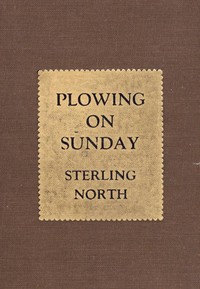
Plowing On Sunday by Sterling North
Sterling North's Plowing On Sunday is a memoir that reads like a novel. It zooms in on a specific, pivotal year in his childhood in rural Wisconsin at the dawn of the 20th century.
The Story
The book is built around a simple, powerful contrast. On one side is Sterling's father, a principled and devout man for whom Sunday is a day of absolute rest, a sacred rule. On the other side is the relentless progress of the modern age—represented by the family's first gasoline-powered tractor. The central event, which gives the book its title, is the moment Sterling's father must break his own strict code and plow on a Sunday to save the season's crops. This single act ripples through the family and the community, symbolizing a much bigger change. Woven around this are the everyday adventures of young Sterling: his friendships, his encounters with the natural world, and his growing awareness of the larger world beyond the farm, from the first telephones to the rumblings of World War I.
Why You Should Read It
This book completely charmed me. It’s not about huge historical events, but about how those events quietly change a family's dinner table conversations. North has a gift for making the past feel immediate. You can almost feel the chill of the Wisconsin air and the vibration of that newfangled tractor. What really sticks with you are the characters, especially his father. He’s not a caricature of strictness, but a complex, loving man trying to do right by his faith and his family in a world that's rewriting all the rules. The book is a beautiful, unsentimental look at that last moment of true agricultural childhood in America, caught right before it disappeared forever.
Final Verdict
Plowing On Sunday is perfect for anyone who loves a well-told personal story with a strong sense of place. If you enjoyed books like Little House on the Prairie for their detail or A Christmas Story for their warm, nostalgic humor, you'll feel right at home here. It's especially great for readers curious about early 1900s America, not from a general's or politician's perspective, but from the view of a boy watching his father's hands on the plow. It’s a gentle, insightful, and deeply human snapshot of a turning point.
This digital edition is based on a public domain text. Enjoy reading and sharing without restrictions.
Karen Gonzalez
2 months agoWhile browsing through various academic sources, the attention to detail regarding the core terminology is flawless. Highly recommended for those seeking credible information.
Nancy Sanchez
3 months agoBased on the summary, I decided to read it and the arguments are well-supported by credible references. I will read more from this author.
Steven Brown
1 year agoNot bad at all.
Brian Thomas
1 year agoAfter hearing about this author multiple times, the author's voice is distinct and makes complex topics easy to digest. A true masterpiece.








Sarah Miller
1 year agoThis is now a staple reference in my professional collection.