About 125 minutes
The Princess Aline — A Closer Reading
Wandering Heroes Classic Adventures
28,741 recorded words. 58 minutes difference from this book's estimate.
View Gutenberg source #327
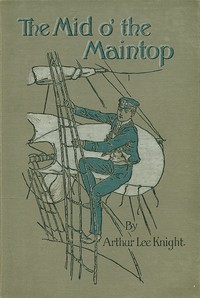
The mid of the maintop — Text and Context can be approached with a clearer sense of reading commitment from its source measurements: 15,245 words, 1 hr 7 min estimated reading time, and 2 detected text sections.
The text analysis averages about 24.2 words per sentence, while the detected sections provide another way to judge how the source is divided.
Project Gutenberg metadata also associates the work with “Seafaring life -- Juvenile fiction,” connecting these edition facts with the source record’s subject description.
Explore this collection
These alternatives are selected using recorded categories and estimated reading time.
About 125 minutes
Wandering Heroes Classic Adventures
28,741 recorded words. 58 minutes difference from this book's estimate.
View Gutenberg source #327About 208 minutes
Wandering Heroes Classic Adventures
47,790 recorded words. 141 minutes difference from this book's estimate.
View Gutenberg source #76660About 211 minutes
Wandering Heroes Classic Adventures
48,432 recorded words. 144 minutes difference from this book's estimate.
View Gutenberg source #306Search stored excerpts and compare books → Choose by your preferences →
Choices use stored catalog measurements. Estimates vary with reading speed. A shared category is a catalog label, not a claim that two books have the same argument or literary quality.
Search reads excerpt text stored with this catalog and links to its associated Gutenberg record. The connection is stored in the site database; this tool does not recheck that every excerpt is word-for-word identical to that external record. Excerpt search does not cover every chapter and does not verify historical publication dates.
Catalog snapshot checked: 2026-09-25. Coverage: 98 public books, 98 available source excerpts.
Calculated from edition completeness, EPUB availability, text structure and catalogue metadata. Not a user rating.
Total of 100 points, scaled to a 2.5-5.0 range. Editions with an empty description or a missing EPUB file are not scored.
Public-domain source text
The source text is kept in the dedicated reader, separate from this catalogue record and its commentary.
Arthur Lee Knight's The Mid of the Maintop opens aboard the fifty-gun frigate Forte, patrolling the East African coast to suppress the slave trade. The narrative immediately establishes a rhythm of sudden physical action: a falling barometer, a dense fog, and a squall that hurls midshipman Jack Villiers overboard. This incident—a fall from the rigging—is the first of several abrupt transitions that define the book's structure. Knight moves swiftly from the crowded deck to the isolation of the sea, then to Arab dhows and Somali shores, rarely pausing for reflection. The story is propelled by external events—storms, chases, kidnappings—rather than interior character development, and the reader is carried along by the same urgency that drives the crew.
The opening chapter establishes a pattern of meteorological menace. Captain Brooke watches the barometer fall ominously; a dense fog drives up; a squall bursts upon the ship. These weather events are not mere backdrop but active agents in the plot. The fog that envelops the Forte—described as blowing 'in clouds of vapour through her network of rigging'—is the immediate cause of Jack's accident. The heavy wet main-sheet, dragged upward by the straining sail, strikes his feet and flings him overboard. Knight uses the ship's physical details—ratlines, hammock-nettings, topsails—to anchor the action in a tangible maritime world. The fog recurs later as a tactical element during the pursuit, obscuring vision and heightening uncertainty. This repeated weather motif gives the early chapters a cohesive sensory texture, even as the plot shifts rapidly from ship to shore.
Once Jack is kidnapped, the narrative splits into two parallel tracks: the captive's unseen ordeal and the rescue expedition's preparations. Knight devotes considerable space to the logistical details of fitting out the naval brigade—hoisting out the steam-launch, arming men with rifles and cutlasses, mounting a seven-pounder in the launch's bows. These passages ground the adventure in credible naval procedure. The expedition's departure is delayed by a sunset that brings 'scarcely any twilight in the tropic zone,' a small but telling detail that reinforces the setting's specificity. The pursuit then becomes a series of short, tense scenes: the sighting of canoes, the capture of fishermen, the approach to the Joo-joo river. Each scene is a discrete unit, linked by the overarching goal of rescue but often separated by gaps in time or perspective. This episodic structure mirrors the stop-and-start nature of the search itself.
Knight's descriptions of the African coastline are spare but evocative. Ras Hafoon is a 'bold bluff promontory formed by huge sun-scorched rocks, and utterly destitute of vegetation of any kind.' The shore near the Joo-joo river appears 'bleak and barren-looking,' deserted under a clear sky. These landscapes are functional—they provide obstacles and hiding places—but they also create a consistent visual palette of heat, rock, and emptiness. The contrast with the crowded, ordered world of the Forte is sharp. On the ship, every man has a station; the decks are 'crowded' and the topmen swarm aloft. On land, the terrain is empty and unpredictable, offering cover for ambushes. This opposition between the known space of the vessel and the unknown territory of the coast drives much of the tension. The reader, like the crew, must rely on telescopes and guesswork to interpret the silent shore.
Captain Brooke's interactions with the Arab prisoners reveal a central tension in the narrative: the desire to recover Jack without provoking his captors to kill him. The released prisoners are warned that 'if a hair of the missing midshipman's head was hurt they would all eventually be recaptured and hanged at the yard-arm.' This threat of reprisal hangs over the expedition. Knight does not depict the Arab characters in detail—they remain largely offstage, their motives inferred from their actions. The narrative focuses instead on the officers' calculations: the risk that the Arabs 'might put Jack to death out of pure spite,' the difficulty of tracking fugitives who have vanished 'like so many startled deer.' The story's moral framework is clear—the British are the agents of order and justice—but the actual pursuit is marked by uncertainty and delay. The reader is left to wonder whether the threats will be enough to keep Jack alive.
The Mid of the Maintop rewards attention to its physical details: the heave of the main-sheet, the feel of a falling barometer, the silence of a deserted shore. Knight builds his adventure from these concrete elements, moving his characters through a world of sudden storms and hidden enemies. Readers who enjoy naval fiction will find a brisk, episodic tale that prioritizes action over introspection. The incomplete excerpts leave the outcome of the rescue unknown, but the story's momentum suggests a resolution as swift as its beginning.
Reading about Knight’s fog and heat brought back afternoons in my grandfather’s study, the air thick with pipe smoke and the slow creak of his chair—I felt that same suspended stillness in The Princess Aline — A Closer Reading, when the yacht drifts past white cliffs and nothing moves but the water. That book’s quiet longing lingered for days, much like this one’s shimmering African coast. The Princess Aline — A Closer Reading holds a similar warmth, a memory of distance.
Use these questions to collect your thoughts before moving on.