
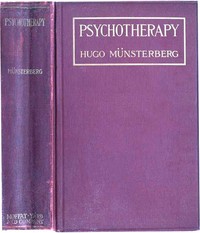
Psychotherapy by Hugo Münsterberg
Let's clear something up right away: this isn't a novel. There's no detective to follow or family saga to unravel. The 'story' here is the birth of an idea. Hugo Münsterberg's Psychotherapy is his attempt to map the uncharted territory of the human mind and propose a systematic way to heal it.
The Story
Münsterberg walks you through his view of what 'psychotherapy' even means. He breaks down different methods, from direct suggestion (almost like a gentle command) to deeper analysis that tries to uncover hidden conflicts. He talks about treating specific issues like phobias, obsessive thoughts, and what was then called 'hysteria.' The narrative is his logical argument, building a case for psychology as a legitimate medical tool. You see him wrestle with big questions: How do you prove a treatment works? Where is the line between physical and mental illness? He references real cases and debates with other thinkers of his day, giving you a front-row seat to psychology's messy, exciting first steps.
Why You Should Read It
I loved this book for its raw, foundational energy. Reading Münsterberg is like listening to a brilliant, slightly stubborn professor explain his life's work. You can feel his conviction. Some of his methods feel dated now, but that's the point! It shows how far we've come. More importantly, it highlights how many core questions—about the power of belief, the role of the therapist, and the connection between mind and body—are still central today. It made me appreciate the bravery of those early practitioners. They were trying to help people with problems everyone else had given up on, using only words and understanding.
Final Verdict
This book is perfect for anyone curious about the history of psychology, therapy, or medicine. It's for the reader who enjoys primary sources and wants to hear ideas straight from the source, without a modern filter. If you're a fan of authors like Oliver Sacks or Stephen Pinker, you'll appreciate meeting one of their intellectual ancestors. It's not a light beach read, but it's surprisingly accessible. You'll come away with a deeper understanding of why we think about therapy the way we do. Just be prepared—you might start seeing the roots of modern techniques on every page.
This publication is available for unrestricted use. Thank you for supporting open literature.
Michael Perez
7 months agoThe information is current and very relevant to today's needs.
Robert Jones
10 months agoHaving read this twice, the narrative structure is incredibly compelling. Absolutely essential reading.
Aiden Rodriguez
1 year agoFinally found time to read this!
George Wilson
8 months agoHigh quality edition, very readable.






Donald Brown
1 year agoA must-have for graduate-level students in this discipline.