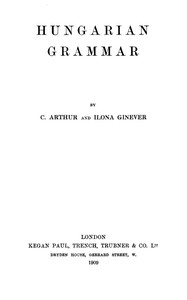
Hungarian grammar by Charles Arthur Ginever and Ilona De Györy Ginever
I never thought I’d enjoy reading a grammar book for fun. But leave it to old-school linguists Charles and Ilona Ginever to prove me wrong. Their treatise on Hungarian grammar, published way back before your grandma was born, landed on my desk, and I opened it expecting dust bunnies and boring rules—what I found was pure charm.
The Story
Okay, there’s no plot with characters named Steve. Hungarian Grammar is exactly what it says on the tin: a neat, punchy breakdown of how this weirdly complex language actually works. Hungarian (or Magyar) has a legendary rep: with minimal ties to European neighbors but loaded with cousins like Finnish? Not exactly. Ginever approaches this thing piece by piece, from spelling and sounds to nouns, adjectives, and verbs that warp way more than English. You see order inside the chaos—no crazy plot twists except maybe when a Hungarian verb says something about ‘if you’d been able to cause him to go’ in a single word. But the book’s real story? It is an intellectual treasure hunt.
Why You Should Read It
Anything written before 1920 risks feeling like required oral surgery. Except this one is full of these little moments where you sense Ginever as a person—thrilled to share her love for her language. The explanations cut through fog (yes, vowel harmony finally clicks). This isn’t just about grammar: it’s about facing a mental maze you might actually finish. I felt clever reading it. It respects your struggle but throws you a few matches inside the dark cave.
Final Verdict
If you want textbook–brownie points for learning through modern apps and memes—precede. But if you dream of unlocking one of human language’s biggest puzzles with an insightful, quirky travel guide from the past, this is Ginever’s giant heart. The book also won’t spawn popups asking if you meant to spell ‘hajnal’ (dawn) correctly. It’s from 1885, so maybe find digital copy or dust off one in university library. Highly recommended for: history-of–linguistics dorks, deep–dive language learners with good patience, and anyone convinced languages are just code—not living puzzles. You will learn more than you expect and smile while frustrating yourself. Perfect for stubborn introverts!
This content is free to share and distribute. It serves as a testament to our shared literary heritage.
Charles Thomas
9 months agoAfter a thorough walkthrough of the table of contents, the chapter on advanced strategies offers insights I haven't seen elsewhere. The insights gained here are worth every minute of reading.


Mary Jackson
4 months agoI appreciate the objective tone and the evidence-based approach.