
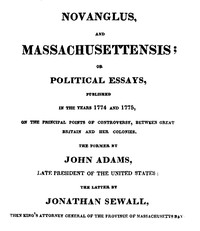
Novanglus, and Massachusettensis by John Adams and Daniel Leonard
Let's set the scene. It's 1774. The Boston Tea Party is fresh in everyone's mind, British troops are occupying the city, and the air in Massachusetts is thick with tension. Into this moment step two of the colony's sharpest legal minds: John Adams and his friend (and sometimes rival) Daniel Leonard. They don't start a rebellion in the streets. Instead, they wage a war of words in the pages of the Boston Gazette.
The Story
This book is a collection of their published essays. Leonard writes first, under the name 'Massachusettensis.' He argues that while Parliament has made mistakes, the colonies' best path is to remain loyal British subjects. He believes in working within the system, using legal arguments and appeals to restore their rights. He warns that rebellion will lead to chaos and ruin. John Adams, writing as 'Novanglus,' fires back. He dismantles Leonard's arguments point by point. Adams claims Parliament has no legitimate authority over the colonies at all—that they are separate entities connected only through the King. He makes the case that the colonists' natural rights are being violated, and that resistance is not just a right, but a duty. The back-and-forth is a masterclass in political argument, covering history, law, and philosophy.
Why You Should Read It
What makes this so gripping isn't just the history, but the human drama. These aren't marble statues yet; they're living, breathing men with everything to lose. You can feel the urgency in their words. Leonard isn't a villain; he's a thoughtful conservative terrified of anarchy. Adams isn't a mythical hero; he's a frustrated lawyer building a radical new idea of government from the ground up. Reading their exchange is like watching the American Revolution being coded, line by line, before the first shot was fired. You see the exact legal and moral foundations being laid. It strips away 250 years of myth and shows you the messy, brilliant, and terrifying process of inventing a nation.
Final Verdict
This book is perfect for anyone who loves a great debate, political drama, or origin stories. If you've ever read the Declaration of Independence or the Constitution and wondered, 'How did they even get to this point?'—this is your answer. It's also a fascinating read for fans of legal thrillers, as the arguments are incredibly detailed and precise. It might feel a bit dense if you're completely new to Revolutionary-era history, but stick with it. There's no better way to understand the intellectual earthquake that created the United States than by listening to two of its architects argue about it, not knowing who would win.
This digital edition is based on a public domain text. Share knowledge freely with the world.
Michelle Taylor
1 year agoHonestly, the content flows smoothly from one chapter to the next. Thanks for sharing this review.

Michael Brown
1 year agoComparing this to other titles in the same genre, the case studies and practical examples provided add immense value. I appreciate the effort that went into this curation.