
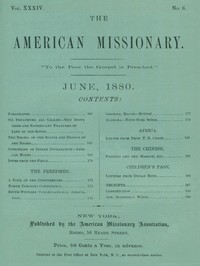
The American Missionary — Volume 34, No. 06, June, 1880 by Various
This isn't a book with a plot in the traditional sense. It's a primary source, a monthly magazine published by the American Missionary Association. Think of it as a newsletter from the front lines of social change in 1880. The 'story' is the ongoing work of the Association, told through official reports, personal letters from the field, and detailed financial statements.
The Story
The issue opens with a sobering report on the condition of the freed people in the South, highlighting the desperate need for schools and basic resources. Then, you're dropped into letters from missionaries and teachers. One might be from a woman in Tennessee describing her one-room schoolhouse packed with eager children of all ages. Another comes from a missionary in Dakota Territory, writing about interactions with Native communities. The narrative is built from these disjointed, earnest fragments. There are lists of donors (from $100 gifts to 50-cent contributions), updates on church construction, and obituaries for dedicated workers. The throughline is a relentless, almost exhausting, effort to build a more just nation through faith, education, and sheer determination.
Why You Should Read It
You read this for the authentic voice. Textbooks tell you 'Reconstruction was challenging.' This shows you. You feel the frustration in a teacher's plea for more books. You sense the cultural gap in a missionary's bewildered description of a Native ceremony. It’s not always comfortable—the perspectives are firmly rooted in the religious and social views of the time, which can feel paternalistic to a modern reader. But that's what makes it valuable. It removes the historical filter and lets you hear the people, with all their flaws, hopes, and blind spots. The commitment is undeniable, even when the methods make you cringe.
Final Verdict
Perfect for history buffs who want to move beyond summaries and get their hands dirty with primary sources, or for anyone fascinated by the messy, human reality of social movements. It's not a light read, but it's a short, powerful immersion into a pivotal moment. If you've ever wondered what people were actually saying and doing in the decades after the Civil War, this is a compelling place to start. Just be ready to read between the lines.
The copyright for this book has expired, making it public property. Thank you for supporting open literature.
Elizabeth Lee
3 months agoI appreciate the objective tone and the evidence-based approach.
Mary Hernandez
9 months agoFinally found a version that is easy on the eyes.
Robert Garcia
5 months agoIt’s rare to find such a well-structured narrative nowadays, the practical checklists included are a great touch for real-world use. A mandatory read for anyone in this industry.
Joshua Harris
8 months agoThis is one of those stories where the pacing is just right, keeping you engaged. Highly recommended.







Nancy Smith
5 months agoAs someone working in this industry, I found the insights very accurate.