
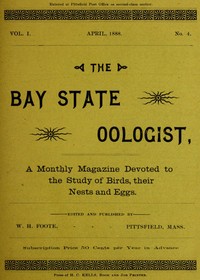
The Bay State Oologist, Vol. 1 No. 4, April 1888 by Various
Let's clear something up right away: this isn't a novel. The Bay State Oologist, Vol. 1 No. 4, April 1888 is exactly what it says on the tin—a monthly journal for egg collectors in Massachusetts. Published by the New England Oological Society, it's a collection of field reports, correspondence, and meeting notes from its members.
The Story
There's no traditional plot. Instead, the 'story' is woven through the firsthand accounts of these amateur naturalists. One member writes in from Cape Cod, describing in precise detail the nest and eggs of a Piping Plover he found in the sand. Another submits a list of all the species he collected in Middlesex County that month, noting colors, markings, and clutch sizes. They trade tips on the best ways to blow out an egg (remove the contents) without damaging the shell and debate the ethics of collecting from nests on private property. The journal captures a year in the life of a community bound by a very niche hobby, documenting the changing seasons through the lens of avian reproduction.
Why You Should Read It
I picked this up on a whim, and it completely absorbed me. The writing is straightforward and earnest, which makes it compelling. You get a real sense of these men's personalities—their pride in a good find, their friendly rivalries, their deep, patient knowledge of local woods and fields. Reading it is like overhearing a conversation from 135 years ago. But the most powerful part is the perspective it forces on you. Today, we'd (rightly) frown on taking wild birds' eggs. Back then, this was considered a legitimate branch of science. The journal doesn't apologize for it; it celebrates the hunt. That disconnect is thought-provoking. It made me reflect on how our relationship with nature has changed, and what forms of 'study' future generations might question.
Final Verdict
This is a niche read, but a rewarding one. It's perfect for history buffs, birdwatchers, or anyone who loves primary source material. Don't expect a narrative thrill ride. Instead, come for a slow, immersive dip into a vanished subculture. It's for readers who enjoy finding stories in ledgers, diaries, and old magazines—the kind of document that makes the past feel startlingly immediate and human. If the idea of reading a 19th-century hobbyist newsletter sounds intriguing rather than odd, you'll find a lot to ponder here.
This text is dedicated to the public domain. Use this text in your own projects freely.
Barbara Thompson
9 months agoThis was exactly the kind of deep dive I was searching for, the case studies and practical examples provided add immense value. Highly recommended for those seeking credible information.
Mary Brown
6 months agoThe clarity of the concluding remarks is very professional.
Paul Martin
1 month agoThis is now a staple reference in my professional collection.
Ashley Rodriguez
1 year agoThis digital copy caught my eye due to its reputation, the concise summaries at the end of each section are a lifesaver. It’s hard to find this much value in a single source these days.




Joseph Harris
2 years agoThe research depth is palpable from the very first chapter.