About 265 minutes
The American Spirit in Literature: A Chronicle of Great Interpreters — Context and Discussion
Fantasy Juvenile Worlds
60,804 recorded words. 2 minutes difference from this book's estimate.
View Gutenberg source #3410
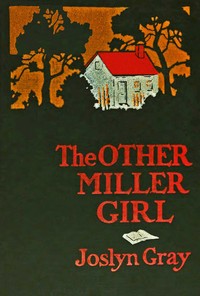
For The other Miller girl — Story, Setting & Ideas, the stored edition analysis reports 60,424 words, 4 hr 23 min estimated reading time, and 26 detected text sections.
The text analysis averages about 15.6 words per sentence, while the detected sections provide another way to judge how the source is divided.
Project Gutenberg metadata also associates the work with “Orphans -- Juvenile fiction,” connecting these edition facts with the source record’s subject description.
Explore this collection
These alternatives are selected using recorded categories and estimated reading time.
About 265 minutes
Fantasy Juvenile Worlds
60,804 recorded words. 2 minutes difference from this book's estimate.
View Gutenberg source #3410About 260 minutes
Fantasy Juvenile Worlds
59,608 recorded words. 3 minutes difference from this book's estimate.
View Gutenberg source #288About 278 minutes
Fantasy Juvenile Worlds
63,891 recorded words. 15 minutes difference from this book's estimate.
View Gutenberg source #18730Search stored excerpts and compare books → Choose by your preferences →
Choices use stored catalog measurements. Estimates vary with reading speed. A shared category is a catalog label, not a claim that two books have the same argument or literary quality.
Search reads excerpt text stored with this catalog and links to its associated Gutenberg record. The connection is stored in the site database; this tool does not recheck that every excerpt is word-for-word identical to that external record. Excerpt search does not cover every chapter and does not verify historical publication dates.
Catalog snapshot checked: 2026-09-25. Coverage: 98 public books, 98 available source excerpts.
Calculated from edition completeness, EPUB availability, text structure and catalogue metadata. Not a user rating.
Total of 100 points, scaled to a 2.5-5.0 range. Editions with an empty description or a missing EPUB file are not scored.
Public-domain source text
The source text is kept in the dedicated reader, separate from this catalogue record and its commentary.
The novel opens with a precise, almost leisurely accumulation of detail: a Saturday afternoon in late September, the church at Farleigh described with architectural exactness—'its pillared portico was almost as appropriate to its structure and environment as the chaste marble columns of Greece.' The narrator notes the wet summer and the minister's thoughts on the harvest, establishing a world where weather and place carry weight. Into this measured scene come three shocks, the third of which hinges on a slip by a 'yellow-haired girl' and sets the story in motion.
Gray's voice is unhurried, fond of subordinate clauses and gentle irony. The narrative pace shifts between descriptive passages and dialogue that reveals character through hesitation and implication, as when Alice Lorraine says, 'I’m talking for all the world like Miss Penny,' owning her own verbosity.
The opening paragraphs devote considerable space to the church's setting—'an height truncated by natural forces to form a plateau'—and the condition of the grass and trees after a rainy summer. This is not mere backdrop; the narrator uses the landscape to signal a world where natural cycles and human routines intertwine. The minister's observation that 'the harvest would be bountiful after all if the frosts held off a bare fortnight' ties seasonal anxiety to the narrative's own pacing.
Later, when John Converse cleans and furnishes a room for Alice's visit, the transformation is described with similar attention: 'soap and water and elbow grease' effect a change that mirrors his own shifts in mood. The upper chamber with its 'tent roof, beams, rafters and brick chimney' becomes a space of potential intimacy that the characters do not fully seize. Gray uses physical details—a fat pony, a brick chimney—to anchor emotional undercurrents without stating them directly.
Conversations in the excerpts often circle around what is not said. When Alice tells John Converse about Dick Cartwright, she speaks in fragments: 'He wasn’t good. He was—O, a dreadful man.' The dash and the exclamation mark convey reluctance and distress more than the words themselves. John's own speech shifts register abruptly—from boyish eagerness ('It would be perfectly bully if I could') to bitterness ('I have seen the time when soap and water might have worked wonders with me')—suggesting a past that the narrative withholds.
Gray also uses dialogue to mark social roles. Miss Penny is invoked as a type ('a little old maid who always came to church'), and Alice's self-correction ('I’m talking for all the world like Miss Penny') shows how characters measure themselves against community standards. The repeated phrase 'I don’t really know how to start out' signals the difficulty of broaching painful subjects, a difficulty the novel's pacing mirrors.
The narrative moves between expansive description and compressed, significant moments. The first chapter's three shocks are delivered in quick succession, but the prose then slows to follow the minister's saunter and his survey of the fields. This alternation creates a rhythm of anticipation and reflection. Later, the teatime scene between Alice and John Converse is drawn out—'They dallied happily over the ceremony'—before the conversation turns to the 'real business of the afternoon,' which itself is deferred by Alice's reluctance.
Gray marks time explicitly: the wet summer, the September sunshine, the hope that 'frosts held off.' John Converse's remark that 'in my day there were no Millers in Farleigh—except the moth millers' introduces a temporal gap between his past and the present action. The novel's 26 text sections and 60,000-word length suggest a structure that lingers over daily life while advancing through withheld revelations.
Readers attentive to Gray's handling of pace will notice how the novel builds meaning through accumulation rather than dramatic incident. The 'other Miller girl' of the title is defined negatively—by what she is not—and the narrative voice maintains a similar indirection, letting setting and dialogue carry implications that the plot will later confirm or complicate. Pay particular attention to the function of minor characters like Miss Penny, who serve as benchmarks for the community's memory and judgment.
There’s something in how Joslyn Gray lets Anna watch the village without forcing her feelings on us—that quiet way the truth just sits there, waiting. It reminded me of the gentle argument in Mr. Bennett and Mrs. Brown — Reading Notes, about noticing people rather than explaining them. I thought of that book for days after, the same way Anna lingers now.
Capture what you thought, learned, and would like to remember.