About 63 minutes
Rose Cottage — Edition Insights
Fantasy Juvenile Worlds
14,393 recorded words. 5 minutes difference from this book's estimate.
View Gutenberg source #72752
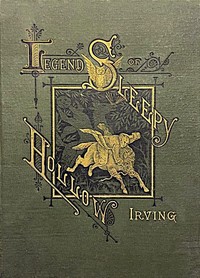
This digital edition of The Legend of Sleepy Hollow — Inside the Classic is described by source-level measurements including 15,453 words, 1 hr 8 min estimated reading time, and 3 detected text sections.
The text analysis averages about 33.1 words per sentence, while the detected sections provide another way to judge how the source is divided.
Project Gutenberg metadata also associates the work with “Ghosts -- Fiction,” connecting these edition facts with the source record’s subject description.
Explore this collection
These alternatives are selected using recorded categories and estimated reading time.
About 63 minutes
Fantasy Juvenile Worlds
14,393 recorded words. 5 minutes difference from this book's estimate.
View Gutenberg source #72752About 63 minutes
Fantasy Juvenile Worlds
14,424 recorded words. 5 minutes difference from this book's estimate.
View Gutenberg source #73200About 60 minutes
Fantasy Juvenile Worlds
13,674 recorded words. 8 minutes difference from this book's estimate.
View Gutenberg source #76619Search stored excerpts and compare books → Choose by your preferences →
Choices use stored catalog measurements. Estimates vary with reading speed. A shared category is a catalog label, not a claim that two books have the same argument or literary quality.
Search reads excerpt text stored with this catalog and links to its associated Gutenberg record. The connection is stored in the site database; this tool does not recheck that every excerpt is word-for-word identical to that external record. Excerpt search does not cover every chapter and does not verify historical publication dates.
Catalog snapshot checked: 2026-09-25. Coverage: 98 public books, 98 available source excerpts.
Calculated from edition completeness, EPUB availability, text structure and catalogue metadata. Not a user rating.
Total of 100 points, scaled to a 2.5-5.0 range. Editions with an empty description or a missing EPUB file are not scored.
Public-domain source text
The source text is kept in the dedicated reader, separate from this catalogue record and its commentary.
The story opens not with Ichabod Crane but with a landscape so drowsy that a gunshot sounds like an outrage. Washington Irving frames the valley through a first-person reminiscence of squirrel-shooting, then immediately retreats behind the persona of the late Diedrich Knickerbocker. This triple-layered narrator—Irving, Knickerbocker, and the recollecting speaker—creates a deliberate distance, inviting readers to question how much of the tale is authentic folklore and how much is playful invention.
The setting itself is the story's first character: a "lap of land among high hills" where a brook murmurs and quails whistle. Irving lingers on the valley's bewitched atmosphere, attributing it to a High German doctor or an Indian prophet. This ambiguity about the source of the "drowsy, dreamy influence" establishes a world where natural and supernatural explanations coexist uneasily.
Irving employs a nested narrative structure that distances the reader from the central action. The title page attributes the manuscript to the late Diedrich Knickerbocker, a fictional historian introduced in Irving's earlier work. Within the text, an unnamed narrator recalls his youth in the valley, then shifts to an omniscient account of Ichabod Crane. This layering serves multiple purposes: it allows Irving to comment on the reliability of local legends, to mock antiquarian pretensions, and to create a sense of oral tradition. The narrator frequently interjects with phrases like "I do not vouch for the fact, but merely advert to it, for the sake of being precise and authentic," undercutting his own authority. Readers are left to decide whether the Headless Horseman is a genuine ghost, a prank by Brom Bones, or a product of Ichabod's superstitious mind.
Food appears as a central motif, particularly in the Van Tassel feast scene. Irving catalogs an exhaustive list of Dutch delicacies: "doughy doughnut, the tender oly koek, and the crisp and crumbling cruller; sweet cakes and short cakes, ginger cakes and honey cakes." The description is almost parodic in its excess, mirroring Ichabod's own gluttonous fantasies. His "heart dilated in proportion as his skin was filled with good cheer," linking emotional satisfaction directly to physical consumption. This imagery recurs in Ichabod's daydreams of becoming "lord of all this scene of almost unimaginable luxury and splendor," where the schoolmaster imagines not love but property and feasts. The abundance of the harvest table contrasts sharply with the barrenness of Ichabod's schoolhouse existence, emphasizing his social and economic aspirations.
The narrative oscillates between static, descriptive passages and bursts of kinetic energy. The opening pages dwell on the valley's "uniform tranquillity," broken only by the narrator's gunshot. Similarly, the Van Tassel party is a tableau of Dutch hospitality until the dance begins. Ichabod's dancing is described as a convulsive spectacle: "Not a limb, not a fibre about him was idle; and to have seen his loosely hung frame in full motion, and clattering about the room, you would have thought St. Vitus himself ... was figuring before you." The contrast between the schoolmaster's awkward vitality and Brom Bones's brooding stillness heightens the romantic rivalry. The most dramatic shift occurs in the final ride, where the quiet country road becomes a scene of frantic pursuit. Irving uses sound—the roar of the gun, the scrape of the fiddle, the hoofbeats of the horseman—to punctuate these transitions.
Irving grounds the supernatural elements in the specific customs and beliefs of the Dutch settlers. The valley's inhabitants are "descendants from the original Dutch settlers," and their "marvellous beliefs" and "trances and visions" are presented as a communal trait. The storytelling session at the Van Tassel piazza, where "sager folks" gossip about the war and local legends, provides the narrative context for the Headless Horseman. Irving emphasizes that these tales are passed down orally, subject to embellishment. The musician, "an old gray-headed negro" who has been the "itinerant orchestra of the neighborhood for more than half a century," represents another thread of oral culture. The story itself is presented as a found manuscript, suggesting that the written version is merely one transcription of a fluid folk tradition. This framing invites readers to consider how legends evolve through retelling.
Irving's tale rewards attention to its narrative scaffolding and sensory contrasts. The frame of Diedrich Knickerbocker, the lavish food catalogues, and the oscillation between drowsy stillness and frantic motion are not mere decoration but integral to the story's effect. Readers may find it useful to note how Irving signals shifts in tone—from mock-heroic to genuinely eerie—and how the landscape itself seems to participate in the action. The ending, famously ambiguous, leaves open whether Ichabod's disappearance is a supernatural event or a practical joke, a question that each reader must settle from the evidence Irving provides.
Years turning those pages, I’ve often felt Irving’s drowsy village holds its breath, waiting for a story to find its listener. That same patient hush lives in Ready, aye ready! — Key Ideas to Explore, where questions rest on the tongue like leaves on the Hudson. One deepens the other’s quiet, a simple kinship of attention.
Answer a few questions and save a private reflection on this device.