About 63 minutes
The sailor's home — Story, Setting & Ideas
Fantasy Juvenile Worlds
14,424 recorded words. 0 minutes difference from this book's estimate.
View Gutenberg source #73200
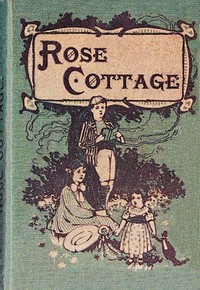
The source record for Rose Cottage — Edition Insights measures this digital text at 14,393 words, 1 hr 3 min estimated reading time, and 2 detected text sections.
The text analysis averages about 15.1 words per sentence, while the detected sections provide another way to judge how the source is divided.
Project Gutenberg metadata also associates the work with “Christian life -- Juvenile fiction,” connecting these edition facts with the source record’s subject description.
Explore this collection
These alternatives are selected using recorded categories and estimated reading time.
About 63 minutes
Fantasy Juvenile Worlds
14,424 recorded words. 0 minutes difference from this book's estimate.
View Gutenberg source #73200About 60 minutes
Fantasy Juvenile Worlds
13,674 recorded words. 3 minutes difference from this book's estimate.
View Gutenberg source #76619About 68 minutes
Fantasy Juvenile Worlds
15,453 recorded words. 5 minutes difference from this book's estimate.
View Gutenberg source #41Search stored excerpts and compare books → Choose by your preferences →
Choices use stored catalog measurements. Estimates vary with reading speed. A shared category is a catalog label, not a claim that two books have the same argument or literary quality.
Search reads excerpt text stored with this catalog and links to its associated Gutenberg record. The connection is stored in the site database; this tool does not recheck that every excerpt is word-for-word identical to that external record. Excerpt search does not cover every chapter and does not verify historical publication dates.
Catalog snapshot checked: 2026-09-25. Coverage: 98 public books, 98 available source excerpts.
Calculated from edition completeness, EPUB availability, text structure and catalogue metadata. Not a user rating.
Total of 100 points, scaled to a 2.5-5.0 range. Editions with an empty description or a missing EPUB file are not scored.
Public-domain source text
The source text is kept in the dedicated reader, separate from this catalogue record and its commentary.
The story begins not at Rose Cottage but in Mrs. Mugford's village shop, where the vicar's daughter learns of new tenants through a stream of local news. The narrator dwells on the March landscape—daffodils, white violets, ferns—before letting the shopkeeper's bright brown eyes and neatly banded hair establish a tone of kindly curiosity. This opening signals that the community's web of observation and sympathy will drive the narrative.
The first chapter establishes Sunleigh through Mrs. Mugford's establishment, which sells "drapery, grocery, stationery, ironmongery, and, in fact, nearly every commodity." The shop is a hub of news, and Mrs. Mugford herself is a "bit of a gossip, but a very kindly one." This setting does more than introduce characters; it creates a social geography where information and judgment circulate. The Lethbridge family arrives as outsiders, and the reader learns of them only through what Mrs. Mugford reports: the father is a groom, the mother "sickly-looking," and the children include "two sturdy boys, a little girl and a baby." The cottage itself is described as "pretty" and "thatched," but the family's interior remains closed to view. The narrative voice stays close to the shopkeeper's perspective, so the reader shares her curiosity and her slight pique at being refused entry.
Later in the excerpts, Mrs. Mugford crosses the road to Rose Cottage and finds Mrs. Lethbridge weeping. The conversation turns on the husband's drinking—"gone to the public-house as usual"—and on the wife's bitterness. Mrs. Mugford responds not with blame but with a scriptural reference: "He's wandered away from Christ's fold, but the Good Shepherd… He won't forget him." The language echoes the chapter title "The Good Shepherd" and the earlier reading of John 10:16. The scene is structured as a pastoral visit: the neighbour enters uninvited, offers comfort, and leaves after a "long, confidential chat." The narrator notes that Mrs. Lethbridge "dried her eyes, and was comforted." The episode illustrates how the story uses religious language not as sermon but as a practical tool of consolation within a tight-knit village.
Chapter VI describes the Sunday-school treat with precise attention to weather and social roles. The day is "perfect," with "not one fleck of cloud" and a "fresh, invigorating breeze." Children march from the school-house to the Vicarage grounds, where parents and teachers gather. The vicar is introduced as a widower who has lost three children, yet he remains "bright and cheerful" with young people. The description of the treat is generic—games, races, tea—but the detail that mothers congregate "under the tall elm trees" suggests a segregated social space. The chapter's function is to display the village at its most organized and benevolent, contrasting with the private distress of Rose Cottage. The treat becomes a stage where the community's hierarchies and values are publicly enacted.
Across the excerpts, a consistent narrative pattern emerges: a character observes a need, then acts. Mrs. Mugford notices the empty cottage, then visits; she sees Mrs. Lethbridge's tears, then crosses the road. The vicar's daughter, Marian, appears only briefly, but her role as a conduit of information is established early. The story's voice is third-person but stays close to the perceptions of its female characters—Mrs. Mugford, Miss Morris, Mrs. Lethbridge. The men (the groom, the vicar) are seen from outside. The excerpts do not reveal whether the husband reforms or whether the family stays, but the pattern of neighbourly intervention is already set. The reader is positioned to watch for further acts of noticing and helping, and to see how the community's Christian language translates into action.
The excerpts offer a clear view of the story's method: it builds a village through small, concrete details—a fur boa, a shop counter, a Bible on a shelf—and then sets private grief against public ritual. Readers attentive to the way characters watch and respond will find the narrative's moral logic unfolding in gestures rather than declarations.
I finished Rose Cottage the other afternoon, and something about its quiet, stubborn hope stayed with me. That sense of faith woven into ordinary struggle felt so familiar. It reminded me of what I felt with Worthy of his name — Story, Setting & Ideas, another story that lingers softly after the last page turns.
Create a short personal record of your experience with this book.