About 63 minutes
Rose Cottage — Edition Insights
Fantasy Juvenile Worlds
14,393 recorded words. 3 minutes difference from this book's estimate.
View Gutenberg source #72752
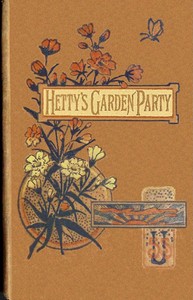
Before opening Hetty's garden-party, and what came of it — Background and Themes, the edition data offers a quick orientation: 13,674 words, 1 hr estimated reading time, and 2 detected text sections.
The text analysis averages about 19.0 words per sentence, while the detected sections provide another way to judge how the source is divided.
Project Gutenberg metadata also associates the work with “England -- Juvenile fiction,” connecting these edition facts with the source record’s subject description.
Explore this collection
These alternatives are selected using recorded categories and estimated reading time.
About 63 minutes
Fantasy Juvenile Worlds
14,393 recorded words. 3 minutes difference from this book's estimate.
View Gutenberg source #72752About 63 minutes
Fantasy Juvenile Worlds
14,424 recorded words. 3 minutes difference from this book's estimate.
View Gutenberg source #73200About 68 minutes
Fantasy Juvenile Worlds
15,453 recorded words. 8 minutes difference from this book's estimate.
View Gutenberg source #41Search stored excerpts and compare books → Choose by your preferences →
Choices use stored catalog measurements. Estimates vary with reading speed. A shared category is a catalog label, not a claim that two books have the same argument or literary quality.
Search reads excerpt text stored with this catalog and links to its associated Gutenberg record. The connection is stored in the site database; this tool does not recheck that every excerpt is word-for-word identical to that external record. Excerpt search does not cover every chapter and does not verify historical publication dates.
Catalog snapshot checked: 2026-09-25. Coverage: 98 public books, 98 available source excerpts.
Calculated from edition completeness, EPUB availability, text structure and catalogue metadata. Not a user rating.
Total of 100 points, scaled to a 2.5-5.0 range. Editions with an empty description or a missing EPUB file are not scored.
Public-domain source text
The source text is kept in the dedicated reader, separate from this catalogue record and its commentary.
The story opens with Hetty Golding eagerly anticipating a visit from her wealthier cousins, Harry and Lettice, and immediately reveals her preoccupation with social display. She pressures her widowed mother to hire extra servants and has already spread rumors among friends that a party will be held. The narrative voice is direct, contrasting Hetty's impatience with Mrs. Golding's calm, practical responses. The early dialogue establishes a central tension: Hetty's desire to appear richer than she is versus her mother's modest means.
The excerpts depict a small domestic sphere where financial constraints are a constant undercurrent. Mrs. Golding describes herself as a “poor widow—comparatively poor, at least”—whose income is “only sufficient for our wants.” Hetty, however, has told “one or two dubious stories” about her mother having plenty of money. The household consists of one servant, yet Hetty dreams of hiring a housemaid like her uncle’s staff. These details ground the moral conflict in concrete economic reality rather than abstract vice.
Leslie uses Hetty’s speech to reveal her values: she worries that her cousins are “used to having everything so nice at home” and frets about making “a little display before their neighbours.” The mother’s voice is consistently measured, while Hetty’s is impulsive and fretful. This contrast in tone reinforces the generational and moral divide between prudent contentment and anxious vanity.
The garden party itself is never described in the excerpts, but its aftermath dominates the later chapters. Hetty’s mother falls ill with “a very serious attack of brain fever,” and the family faces immediate financial crisis: Hetty finds only “a few shillings” in her mother’s desk, tradespeople refuse credit, and she is ashamed to ask her uncle for help. The party has drained their resources.
A key consequence arrives when Mrs. Mavor confronts Hetty, accusing her of taking “a troop of people into my garden” and claiming it was Hetty’s own. The damage must be paid for, and Mrs. Mavor insists on correcting the rumor that the garden belongs to the Goldings. This scene crystallizes the moral: Hetty’s lies have tangible, public repercussions. The language is blunt—Mrs. Mavor calls Hetty’s conduct “unwarrantable”—and Hetty can only offer a “tremulous” apology.
Hetty’s plight intensifies when she learns that her uncle’s family is leaving for Italy, cutting off her last expected support. A letter from Lettice arrives too late: they will be unreachable. Hetty drops the letter “in blank terror and amazement.” The narrative then describes her as “utterly wretched and bewildered,” flinging herself on her bed “too troubled even to seek relief in tears.”
This moment marks a shift from social anxiety to genuine distress. The earlier preoccupation with appearances gives way to a stark, solitary crisis. Leslie does not soften the situation: Hetty has “changed her last shilling,” her mother is unconscious, and no help is in sight. The excerpts end before any resolution, leaving the reader with Hetty’s isolation. The moral lesson is thus delivered through escalating consequence rather than direct sermonizing.
Readers should attend to how Leslie builds the moral argument through small, cumulative details—Hetty’s fibs to schoolfriends, her mother’s quiet warnings, the precise sums of money mentioned. The garden party itself is a blank; its meaning emerges entirely from its fallout. This structure makes the novella less a story about an event than about the chain of errors that precedes and follows it. The excerpts offer a tight, domestic drama where every action has a measurable cost.
That rainy afternoon, Hetty’s garden-party left me thinking about how pride quietly wears down the people we love. Later, almost without noticing, I picked up Rose Cottage — Edition Insights and found the same hush of domestic consequence, rooms holding secrets rather than speeches. It felt less like reading onward and more like the rain had simply shifted windows.
Use these questions to collect your thoughts before moving on.