About 129 minutes
The eyes of innocence — A Reader’s Guide
Historical Psychological Social Fiction
29,606 recorded words. 8 minutes difference from this book's estimate.
View Gutenberg source #73662
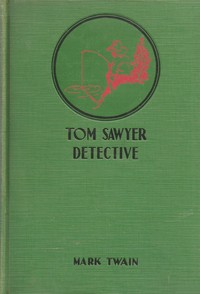
The source record for Tom Sawyer, Detective — Key Ideas to Explore measures this digital text at 27,708 words, 2 hr 1 min estimated reading time, and 12 detected text sections.
The text analysis averages about 21.3 words per sentence, while the detected sections provide another way to judge how the source is divided.
Project Gutenberg metadata also associates the work with “Sawyer, Tom (Fictitious character) -- Fiction,” connecting these edition facts with the source record’s subject description.
Explore this collection
These alternatives are selected using recorded categories and estimated reading time.
About 129 minutes
Historical Psychological Social Fiction
29,606 recorded words. 8 minutes difference from this book's estimate.
View Gutenberg source #73662About 131 minutes
Historical Psychological Social Fiction
29,984 recorded words. 10 minutes difference from this book's estimate.
View Gutenberg source #31777About 135 minutes
Historical Psychological Social Fiction
31,047 recorded words. 14 minutes difference from this book's estimate.
View Gutenberg source #76696Search stored excerpts and compare books → Choose by your preferences →
Choices use stored catalog measurements. Estimates vary with reading speed. A shared category is a catalog label, not a claim that two books have the same argument or literary quality.
Search reads excerpt text stored with this catalog and links to its associated Gutenberg record. The connection is stored in the site database; this tool does not recheck that every excerpt is word-for-word identical to that external record. Excerpt search does not cover every chapter and does not verify historical publication dates.
Catalog snapshot checked: 2026-09-25. Coverage: 98 public books, 98 available source excerpts.
Calculated from edition completeness, EPUB availability, text structure and catalogue metadata. Not a user rating.
Total of 100 points, scaled to a 2.5-5.0 range. Editions with an empty description or a missing EPUB file are not scored.
Public-domain source text
The source text is kept in the dedicated reader, separate from this catalogue record and its commentary.
Mark Twain opens Tom Sawyer, Detective with a note claiming the story's incidents are facts drawn from an old Swedish criminal trial, transferred to America and given new actors. This framing sets the tale apart from pure invention, yet the narrative voice—Huckleberry Finn's—immediately reclaims it for the familiar world of St. Petersburg. The first chapter dwells not on crime but on spring fever: Huck catalogs the boyhood calendar from barefoot time to kite season, then describes a longing for escape that is both comic and poignant. The mystery, when it arrives, is filtered through Huck's limited understanding and Tom's theatrical ambitions, creating a detective story that is as much about the narrators as the clues.
Huck's narration establishes a deliberate pace that resists the urgency typical of detective fiction. The opening paragraphs linger on seasonal details—marble time, mumbletypeg, tops and hoops—before any crime is mentioned. This catalog does more than set a scene; it establishes Huck's voice as one that values process over outcome. When he describes spring fever as a desire to get away from "the same old tedious things," the reader recognizes a boy who measures time by its small rituals. Even after the mystery unfolds, Huck returns to these rhythms: watching Jake Dunlap practice his deaf-and-dumb signs, observing the schoolchildren's excitement over the "deef and dummy." The narrative's patience mirrors the characters' waiting—for summer, for news, for the next clue—and makes the eventual revelations feel earned rather than rushed.
The character known only as Dummy or the "deef and dummy" becomes a focal point for the community's curiosity and a test of Tom and Huck's secrecy. Twain emphasizes the theatricality of silence: Dummy performs his muteness through "goo-gooing" and slate-writing that only Brace Dunlap claims to read. The boys watch him work his signs "very good," aware that any slip could expose their prior acquaintance. This performance of disability raises questions about authenticity and trust. The neighbors, eager for a "rattling curiosity," project their own romantic notions onto him, while the reader, like Tom and Huck, suspects a more calculated role. Twain leaves the gap between appearance and reality open, using the stranger's silence to generate suspense without resolving it prematurely.
Tom Sawyer approaches detection as a dramatic role. When he and Huck must keep quiet about knowing Dummy, Tom declares it "still more heroic to keep mum" and claims "there warn't two boys in a million could do it." This self-conscious heroism colors every investigation. Tom's methods are improvisational, driven by a desire for adventure rather than systematic reasoning. Huck, by contrast, reports events with a plainness that undercuts Tom's grandiosity. The narrative never endorses Tom's detective skills; instead, it presents his confidence as a character trait that sometimes leads to insight and sometimes to error. Twain thus creates a detective story where the detective's vanity is part of the puzzle, and the reader must weigh his pronouncements against Huck's more grounded observations.
When Jubiter Dunlap disappears, the community's response shifts from casual gossip to organized search parties. Huck describes the hunt with boyish enthusiasm—"it was noble good times and exciting"—but the tone darkens as rumors of murder spread. Twain shows how suspicion circulates through a small town: everyone asks everyone else, heads shake, tongues clack. The search for "remainders" (a grimly comic euphemism) becomes a social event, blending genuine concern with the thrill of the macabre. Uncle Silas, already afflicted by his own troubles, finds comfort in Dummy's presence, suggesting that the mystery touches personal grief as well as public curiosity. The chapter ends without resolution, leaving the reader to wonder whether the missing man will be found alive, dead, or something in between.
Readers familiar with Twain's earlier works will recognize the landscape and voices, but Tom Sawyer, Detective offers a distinct pleasure: watching a master stylist adapt a real criminal case into a yarn that never forgets its narrator is a boy. Huck's voice—with its digressions, its catalog of small pleasures, and its deadpan understatement—transforms a conventional mystery into a meditation on how stories are told. Pay attention to what the characters choose not to say; the silences, both feigned and real, carry as much weight as any confession.
I found myself thinking about how easily a stranger’s silence can be misread, especially along a river where everyone’s carrying something unsaid. That led me back to an old shelf companion, A Hundred and Sixty Books by Washington Authors Some Other Writers Who are Contributors to Periodical Literature; Lines Worth Knowing by Heart — Reading Notes, and the quiet way it holds forgotten voices. Some mysteries only ask for a patient ear.
Save your reaction, strongest insight, and memorable passage.