About 337 minutes
The shooting party — Inside the Classic
Historical Psychological Social Fiction
77,427 recorded words. 0 minutes difference from this book's estimate.
View Gutenberg source #73729
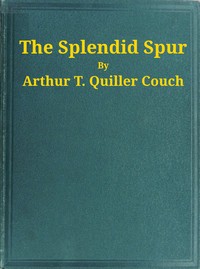
This digital edition of The Splendid Spur Being Memoirs of the Adventures of Mr. John Marvel, a Servant of His Late Majesty King Charles I, in the Years 1642-3 — Story, Setting & Ideas is described by source-level measurements including 77,426 words, 5 hr 37 min estimated reading time, and 22 detected text sections.
The text analysis averages about 19.0 words per sentence, while the detected sections provide another way to judge how the source is divided.
Project Gutenberg metadata also associates the work with “Great Britain -- History -- Charles I, 1625-1649 -- Fiction,” connecting these edition facts with the source record’s subject description.
Explore this collection
These alternatives are selected using recorded categories and estimated reading time.
About 337 minutes
Historical Psychological Social Fiction
77,427 recorded words. 0 minutes difference from this book's estimate.
View Gutenberg source #73729About 315 minutes
Historical Psychological Social Fiction
72,386 recorded words. 22 minutes difference from this book's estimate.
View Gutenberg source #16715About 387 minutes
Historical Psychological Social Fiction
88,802 recorded words. 50 minutes difference from this book's estimate.
View Gutenberg source #294Search stored excerpts and compare books → Choose by your preferences →
Choices use stored catalog measurements. Estimates vary with reading speed. A shared category is a catalog label, not a claim that two books have the same argument or literary quality.
Search reads excerpt text stored with this catalog and links to its associated Gutenberg record. The connection is stored in the site database; this tool does not recheck that every excerpt is word-for-word identical to that external record. Excerpt search does not cover every chapter and does not verify historical publication dates.
Catalog snapshot checked: 2026-09-25. Coverage: 98 public books, 98 available source excerpts.
Calculated from edition completeness, EPUB availability, text structure and catalogue metadata. Not a user rating.
Total of 100 points, scaled to a 2.5-5.0 range. Editions with an empty description or a missing EPUB file are not scored.
Public-domain source text
The source text is kept in the dedicated reader, separate from this catalogue record and its commentary.
Arthur Quiller-Couch's The Splendid Spur presents itself as the edited memoirs of John Marvel, a servant of Charles I, covering the years 1642–3. The narrative voice is immediately distinctive: Marvel writes in a colloquial, self-deprecating tone, often addressing the reader directly. The opening chapters establish a brisk, episodic pace, moving from a shipboard scene with a drunken crew to a tense landing on the Cornish coast. Quiller-Couch uses dialect and song to differentiate characters, as when the old sailor Gabriel mutters about being denied the 'sweet effects o’ quantums,' and Marvel and his companion Delia trade verses that reveal their prickly rapport. The editor's framing—a modernized edition of a 17th-century manuscript—adds a layer of historical distance, yet the prose remains immediate and sensory, with vivid descriptions of light on the sea and the 'black cliffs' of Bude Bay.
The novel's conceit—that we are reading Marvel's own account, edited by 'Q'—shapes every sentence. Marvel's voice is that of a young man caught between bravado and self-doubt. He admits to 'cheap reflections' and undercuts his own heroics, as when he caps Delia's song with a sour verse and then complains about her criticism of his singing. This self-awareness keeps the narrative from becoming merely swashbuckling. Quiller-Couch also uses the editorial frame to comment on the story's authenticity, as in the introductory note that discusses the signature 'Q' and the author's rivalry with Kipling. The effect is a layered reading experience: we are always aware of the memoir as a constructed artifact, yet Marvel's voice feels immediate and unpolished.
The excerpts show a marked shift in pace between the opening sea voyage and the land-based action. The shipboard scenes are leisurely, filled with character sketches of the drunken crew and Captain Billy Pottery's eccentric philosophy: 'I be a collector an’ a man o’ conscience both.' The narrative lingers on the 'white frost' and the 'pink and lilac' sea, slowing time to a painterly stillness. Once Marvel and Delia step ashore, the pace quickens. The dialogue becomes clipped, the setting more confined—a 'rift in the black cliffs' and a winding road. This change mirrors Marvel's own anxiety: he carries urgent intelligence and must move quickly. The contrast between the Godsend's golden glow and the 'hells of death' in Delia's song underscores the tonal shift from comic adventure to something more perilous.
Quiller-Couch uses dialect and song not merely as local color but as tools of characterization. Gabriel's speech—'a miserable ould worms to whom the sweet effects o’ quantums be denied'—marks him as a comic figure, but also as a man with his own philosophy of drink. Captain Billy's booming voice and his advice to 'ply her briskly' reveal a bluff, worldly man. The songs exchanged between Marvel and Delia are particularly revealing: Delia's 'Hey! nonni—nonni—no!' is a jaunty, almost mocking tune, while Marvel's reply is a sour couplet. Their argument over whose voice is 'beautiful' shows their relationship as one of constant, affectionate sparring. These verbal tics—the dialect, the songs, the interruptions—give each character a distinct aural signature, making the world of the novel feel lived-in and specific.
Readers approaching The Splendid Spur should attend to the interplay between Marvel's naive narration and Quiller-Couch's sophisticated framing. The novel rewards attention to its shifts in register—from the broad comedy of the drunken crew to the tense quiet of the landing scene. The songs and dialect are not decorative; they carry emotional weight and advance character. This is a book that asks to be read aloud, if only to catch the rhythm of its voices.
I remember evenings when Captain Marvel’s rough songs and shifting tides felt like a summer nearly forgotten. That same ache lives in Staccato Notes of a Vanished Summer (from Literature and Life) — Reading Companion, where every brief impression lingers like a hand waved from a distant shore. Such books keep our quiet seasons company, don’t they?
Create a short personal record of your experience with this book.