About 307 minutes
Bases full! — Inside the Classic
Science Fiction Utopias
70,593 recorded words. 11 minutes difference from this book's estimate.
View Gutenberg source #76800
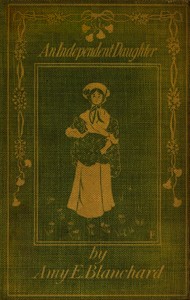
This digital edition of An independent daughter — Background and Themes is described by source-level measurements including 73,094 words, 5 hr 18 min estimated reading time, and 22 detected text sections.
The text analysis averages about 13.3 words per sentence, while the detected sections provide another way to judge how the source is divided.
Project Gutenberg metadata also associates the work with “Young women -- Juvenile fiction,” connecting these edition facts with the source record’s subject description.
Explore this collection
These alternatives are selected using recorded categories and estimated reading time.
About 307 minutes
Science Fiction Utopias
70,593 recorded words. 11 minutes difference from this book's estimate.
View Gutenberg source #76800About 264 minutes
Science Fiction Utopias
60,553 recorded words. 54 minutes difference from this book's estimate.
View Gutenberg source #131About 400 minutes
Science Fiction Utopias
91,989 recorded words. 82 minutes difference from this book's estimate.
View Gutenberg source #75968Search stored excerpts and compare books → Choose by your preferences →
Choices use stored catalog measurements. Estimates vary with reading speed. A shared category is a catalog label, not a claim that two books have the same argument or literary quality.
Search reads excerpt text stored with this catalog and links to its associated Gutenberg record. The connection is stored in the site database; this tool does not recheck that every excerpt is word-for-word identical to that external record. Excerpt search does not cover every chapter and does not verify historical publication dates.
Catalog snapshot checked: 2026-09-25. Coverage: 98 public books, 98 available source excerpts.
Calculated from edition completeness, EPUB availability, text structure and catalogue metadata. Not a user rating.
Total of 100 points, scaled to a 2.5-5.0 range. Editions with an empty description or a missing EPUB file are not scored.
Public-domain source text
The source text is kept in the dedicated reader, separate from this catalogue record and its commentary.
The novel opens with Persis Holmes, a recent college graduate, walking across campus in her academic gown, her "mortar board" askew. She is immediately characterized by her physical poise and her friend Patty's observation that she looks "just like a poster girl." This visual precision—the swirling gown, the straying locks—establishes a tone of careful observation. The story quickly moves from the familiar world of college to a crisis: a letter from her sister Annis, written from Heidelberg, hints at tensions that will soon force Persis to confront a painful truth about her family. The narrative voice is direct, favoring concrete detail over sentiment, and the early chapters establish a pattern of contrasts—between Persis's composed exterior and her inner turmoil, between the security of college and the uncertainty ahead.
The excerpts reveal that Persis's crisis is triggered by a discovery that "she had been led to believe what was not strictly true." This is not a simple misunderstanding but a fundamental breach of trust that makes it "impossible for her to live any longer in the old relation." The narrative emphasizes her subjective experience: she reinterprets past incidents, magnifying "every little possible indifference" and finding "each word of censure returned doubly charged with bitterness." Yet the text also notes that "the longing for mother and home increased day by day," creating a tension between her intellectual resolve and her emotional attachment. The author avoids specifying the exact nature of the deception, leaving the reader to infer from Persis's reactions and the practical consequences—her decision to leave home and seek employment.
Persis's bid for independence is immediately tested by material realities. She arrives as a stranger in a rural community and is taken in by the Temples, a couple who debate her trustworthiness. Mr. Temple is skeptical: "You don't know anything about her, Martha." His wife, however, is more sympathetic, speculating that a "nice-looking young man" might be involved. This exchange highlights the social scrutiny Persis faces. Her attempt to secure a teaching position is blocked by her inability to produce a certificate or diploma—a concrete obstacle that forces her to rely on the goodwill of the trustees. The narrative dwells on the practical details of references, examinations, and the politics of local school boards, grounding Persis's idealism in the gritty mechanics of self-support.
The dialogue is a key vehicle for characterization. Mrs. Temple's speech is colloquial and intuitive: "Maybe she had to give up her fortune or marry him." Mr. Temple's replies are dry and pragmatic: "That's just like a woman. She always scents a love affair." These exchanges not only advance the plot but also reveal the social attitudes of the period—the suspicion of strangers, the gendered assumptions about motive. The author uses dialect and rhythm to distinguish characters, from Patty's breathless enthusiasm to Mr. Temple's gruff kindness. The setting, too, is rendered with specificity: the "gray building" of the college, the "long walk" between "pleasant stretches of green sward," and later the rural landscape of Virginia. These details anchor the story in a particular time and place, making Persis's journey feel both personal and representative.
Readers should attend to the way Blanchard uses physical description—of clothing, posture, and setting—to signal emotional states. The excerpts suggest that Persis's external composure often masks internal conflict, and that the narrative rewards careful attention to small gestures. The incomplete excerpts leave the exact nature of the family secret unclear, but the pattern of misunderstanding and practical negotiation is already established. This is a story about the gap between intention and circumstance, and about the slow, unglamorous work of building an independent life.
There’s something in Persis Holmes’s stubborn pride that reminds me of how we all learn to read our own lives, eventually. That quiet reckoning with who we are when the old anchors pull free. I went back to Hazlitt on English Literature: An Introduction to the Appreciation of Literature — Key Ideas to Explore afterward, pondering how he loved writers for their honest friction. Some books just sit with you that way, like old friends who know your weather.
Use these questions to collect your thoughts before moving on.