About 318 minutes
An independent daughter — Background and Themes
Science Fiction Utopias
73,094 recorded words. 11 minutes difference from this book's estimate.
View Gutenberg source #76993
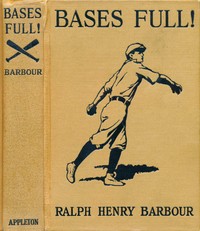
This digital edition of Bases full! — Inside the Classic is described by source-level measurements including 70,593 words, 5 hr 7 min estimated reading time, and 27 detected text sections.
The text analysis averages about 15.4 words per sentence, while the detected sections provide another way to judge how the source is divided.
Project Gutenberg metadata also associates the work with “School sports -- Juvenile fiction,” connecting these edition facts with the source record’s subject description.
Explore this collection
These alternatives are selected using recorded categories and estimated reading time.
About 318 minutes
Science Fiction Utopias
73,094 recorded words. 11 minutes difference from this book's estimate.
View Gutenberg source #76993About 264 minutes
Science Fiction Utopias
60,553 recorded words. 43 minutes difference from this book's estimate.
View Gutenberg source #131About 400 minutes
Science Fiction Utopias
91,989 recorded words. 93 minutes difference from this book's estimate.
View Gutenberg source #75968Search stored excerpts and compare books → Choose by your preferences →
Choices use stored catalog measurements. Estimates vary with reading speed. A shared category is a catalog label, not a claim that two books have the same argument or literary quality.
Search reads excerpt text stored with this catalog and links to its associated Gutenberg record. The connection is stored in the site database; this tool does not recheck that every excerpt is word-for-word identical to that external record. Excerpt search does not cover every chapter and does not verify historical publication dates.
Catalog snapshot checked: 2026-09-25. Coverage: 98 public books, 98 available source excerpts.
Calculated from edition completeness, EPUB availability, text structure and catalogue metadata. Not a user rating.
Total of 100 points, scaled to a 2.5-5.0 range. Editions with an empty description or a missing EPUB file are not scored.
Public-domain source text
The source text is kept in the dedicated reader, separate from this catalogue record and its commentary.
Despite its title and catalog subject, Bases Full! begins not on a diamond but on a hockey rink, with Wyndham's forwards pressing for a goal in a tied 6–6 game. The opening chapter, 'The Winning Goal,' immerses readers in ice-hockey action—'Shoot! Shoot!'—before shifting to a crew race where Wyndham's first boat is 'rowed off her feet' by Highland. Baseball does not appear until Chapter III, and even then the narrative lingers on tryouts and bench dynamics rather than game play. The catalog classifies this as a baseball story, yet the excerpts show a broader sports-school chronicle where hockey, rowing, and a comic car wreck (the 'suicidal Ford') share equal weight with the diamond.
The first chapter's title, 'The Winning Goal,' and its vivid description of a puck sliding past a corner of the net establish a winter-sports setting. Wyndham's hockey team battles Wolcott in 'the last period' with 'only a few minutes remaining.' The prose focuses on skating, stick-handling, and a 'brown-legged player' sweeping behind the goal. This is not a baseball story's typical spring-training opener. The catalog subject 'Baseball stories' is thus misleading for the opening chapters; the book instead presents a multi-sport school year. Later, when baseball practice begins, the narrative still devotes space to rowing—the crew's defeat is described as 'The Wreck of the Hesperus'—and to off-field incidents like Tom's injured shoulder from stopping a runaway car.
The excerpts center on Tom, whose 'hurt feelings were really in the shoulder' after the car incident, and Loring Deane, who buys a score-book and learns 'the science of scoring' while seated in a wheel chair. Loring's disability is treated matter-of-factly: he occupies 'his usual position beyond the first base stand,' and a manager leans over 'the wheel chair, explaining something.' The catalog subject 'Teenage boys -- Juvenile fiction' fits, but the excerpts reveal a specific focus on a physically limited character who participates through observation and record-keeping. Tom's injury sidelines him during practice, and he is 'relegated to the bench,' while Loring's scorekeeping offers an alternative form of engagement with the game. The interplay between active players and a disabled spectator adds a layer not captured by the generic subject headings.
Tom notes that 'Mr. Cooper was not to be seen' for three days and wonders if he has left Freeburg. Loring is 'nutty about Mr. Cooper,' but Tom merely 'sort of liked the old goof.' This adult character, introduced without explanation, hints at a subplot beyond sports. The catalog's 'School sports -- Juvenile fiction' and 'Boarding schools -- Juvenile fiction' do not account for this enigmatic figure. Additionally, a minor character, Wattles, is discovered playing in a scrub game 'in his shirt-sleeves' with town workers, a detail that suggests class or social boundaries within the school setting. The excerpts thus present a world where baseball is only one thread among several, and where adult visitors and off-field adventures complicate the simple sports-story label.
Readers expecting a pure baseball narrative will find instead a school story that moves between ice, water, and diamond, with injuries, scorekeeping, and unexplained adults adding texture. The catalog subjects—especially 'Baseball stories'—narrow the book's actual range. Approach Bases Full! as a multi-sport chronicle of Wyndham School, where the title's promise of a bases-loaded climax may arrive late, after hockey, rowing, and a runaway Ford have already filled the innings.
There’s something about Barbour’s quiet attention to the everyday moments—the scorekeeping, the waiting—that stays with you long after the final page. It reminded me of how Criticism and Fiction lingers, not for grand pronouncements, but for its gentle insistence on truth in small things. I found myself thinking about both on a slow afternoon, the way one does with old friends. Criticism and Fiction — Inside the Classic holds that same warmth, like a familiar room you’re not quite ready to leave.
Use these questions to collect your thoughts before moving on.