About 318 minutes
An independent daughter — Background and Themes
Science Fiction Utopias
73,094 recorded words. 82 minutes difference from this book's estimate.
View Gutenberg source #76993
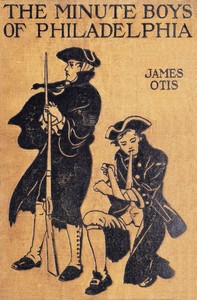
Before opening The Minute Boys of Philadelphia — Background and Themes, the edition data offers a quick orientation: 91,989 words, 6 hr 40 min estimated reading time, and 22 detected text sections.
The text analysis averages about 36.2 words per sentence, while the detected sections provide another way to judge how the source is divided.
Project Gutenberg metadata also associates the work with “Boys -- Juvenile fiction,” connecting these edition facts with the source record’s subject description.
Explore this collection
These alternatives are selected using recorded categories and estimated reading time.
About 318 minutes
Science Fiction Utopias
73,094 recorded words. 82 minutes difference from this book's estimate.
View Gutenberg source #76993About 488 minutes
Science Fiction Utopias
112,099 recorded words. 88 minutes difference from this book's estimate.
View Gutenberg source #76970About 307 minutes
Science Fiction Utopias
70,593 recorded words. 93 minutes difference from this book's estimate.
View Gutenberg source #76800Search stored excerpts and compare books → Choose by your preferences →
Choices use stored catalog measurements. Estimates vary with reading speed. A shared category is a catalog label, not a claim that two books have the same argument or literary quality.
Search reads excerpt text stored with this catalog and links to its associated Gutenberg record. The connection is stored in the site database; this tool does not recheck that every excerpt is word-for-word identical to that external record. Excerpt search does not cover every chapter and does not verify historical publication dates.
Catalog snapshot checked: 2026-09-25. Coverage: 98 public books, 98 available source excerpts.
Calculated from edition completeness, EPUB availability, text structure and catalogue metadata. Not a user rating.
Total of 100 points, scaled to a 2.5-5.0 range. Editions with an empty description or a missing EPUB file are not scored.
Public-domain source text
The source text is kept in the dedicated reader, separate from this catalogue record and its commentary.
The narrator of The Minute Boys of Philadelphia begins by insisting he has “no intention of blowing my own horn,” yet immediately stakes a claim: he and his fellow lads did “very much good for the patriot cause in our own small way.” This tension between modesty and pride runs through the opening chapter, where the speaker addresses readers directly, anticipating skepticism about whether Philadelphia’s youth could have contributed meaningfully to the Revolution. The voice is colloquial and earnest, peppered with phrases like “if it so please you to believe all I have written.”
What sets this book apart from a generic adventure story is its willingness to pause the action for a remarkable set piece: a lengthy excerpt from a letter written by Major John André, describing in ornate detail a British carnival on the Delaware River. The narrator explains that the letter was “captured at Monmouth among some of the British camp equipment,” and he reproduces it to show what the boys were up against—a contrast between the enemy’s gaiety and the patriots’ grim work.
The first chapter establishes a distinctive narrative voice that is both self-effacing and assertive. The speaker repeatedly insists he is not boasting, yet he frames the entire account as a defense of the boys’ contributions: “I dare venture to say you will agree with me … that we, meaning men, women and children, did whatsoever we could for the Cause.” This rhetorical posture suggests the author anticipated readers who might doubt that children played a serious role in the war. The narrator also signals his awareness of the stakes: when the Weaver of Germantown tells the boys they will be acting as spies, the narrator notes that “the gallows would be our final halting place in this world.” The danger is stated plainly, without melodrama.
Rather than describing the British occupation solely through the boys’ eyes, Otis inserts a long, verbatim letter from Major André. The letter depicts a grand regatta with galleys, flatboats lined with green cloth, bands playing “God save the King,” and a salute of seventeen guns. The narrator admits he does not know why the letter was never sent, but he uses it to create a vivid contrast: while the British enjoy “the most picturesque and enlivening scene the eye could desire,” the boys are preparing to “thrust our heads into the lion’s mouth.” This documentary touch gives the novel a layer of historical texture beyond the boys’ own adventures.
The narrator is careful to define what the Minute Boys actually did. They are not soldiers in the usual sense; their role is to gather information, move “this way and that,” and act as spies. The phrase “literally thrust our heads into the lion’s mouth” underscores the peril of their intelligence work. The book’s chapter titles—such as “In the Lion’s Mouth,” “A Narrow Escape,” and “Scaling the Jail Wall”—suggest a series of covert operations rather than pitched battles. The narrator’s insistence that the boys’ efforts were praised by “those who stand high in the American army” frames their service as recognized by adults, lending credibility to their youthful exploits.
Readers should note that the narrator’s voice is the primary lens through which the story is filtered. He frequently addresses the audience directly, explaining his choices in how to tell the tale—for instance, jumping ahead to describe the carnival before finishing an earlier scene. This narrative technique gives the book a conversational, almost oral quality. The inclusion of Major André’s letter is a rare moment where the narrator steps aside to let a primary source speak, offering a glimpse of the enemy’s perspective. Pay attention to how the narrator balances his own modesty with the need to convince readers of the boys’ importance.
That rainy afternoon, The Minute Boys of Philadelphia left me thinking about how stories carry hidden echoes—a boy’s whispered warning alongside an officer’s penned revelry. Later, drifting through another shelf, I found The Influence of Old Norse Literature on English Literature — Edition Insights, and wondered if all borrowed tales leave such quiet fingerprints.
A brief reflection can help important ideas stay with you longer.