About 400 minutes
The Minute Boys of Philadelphia — Background and Themes
Science Fiction Utopias
91,989 recorded words. 88 minutes difference from this book's estimate.
View Gutenberg source #75968
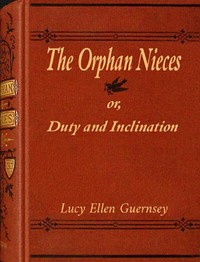
For The orphan nieces — Background and Themes, the stored edition analysis reports 112,099 words, 8 hr 8 min estimated reading time, and 10 detected text sections.
The text analysis averages about 17.4 words per sentence, while the detected sections provide another way to judge how the source is divided.
Project Gutenberg metadata also associates the work with “Christian life -- Juvenile fiction,” connecting these edition facts with the source record’s subject description.
Explore this collection
These alternatives are selected using recorded categories and estimated reading time.
About 400 minutes
Science Fiction Utopias
91,989 recorded words. 88 minutes difference from this book's estimate.
View Gutenberg source #75968About 585 minutes
Science Fiction Utopias
134,404 recorded words. 97 minutes difference from this book's estimate.
View Gutenberg source #70809About 318 minutes
Science Fiction Utopias
73,094 recorded words. 170 minutes difference from this book's estimate.
View Gutenberg source #76993Search stored excerpts and compare books → Choose by your preferences →
Choices use stored catalog measurements. Estimates vary with reading speed. A shared category is a catalog label, not a claim that two books have the same argument or literary quality.
Search reads excerpt text stored with this catalog and links to its associated Gutenberg record. The connection is stored in the site database; this tool does not recheck that every excerpt is word-for-word identical to that external record. Excerpt search does not cover every chapter and does not verify historical publication dates.
Catalog snapshot checked: 2026-09-25. Coverage: 98 public books, 98 available source excerpts.
Calculated from edition completeness, EPUB availability, text structure and catalogue metadata. Not a user rating.
Total of 100 points, scaled to a 2.5-5.0 range. Editions with an empty description or a missing EPUB file are not scored.
Public-domain source text
The source text is kept in the dedicated reader, separate from this catalogue record and its commentary.
The novel opens in a schoolroom during noon recess, where pupils discuss examinations with a mix of dread and anticipation. The scene immediately establishes a pattern of group conversation punctuated by individual reflection: Olive McHenry sighs over the pleasures of exams while her cousin Charlotte sees only the approach of vacation. This tension between collective activity and private feeling recurs throughout the excerpts, as Olive moves from school debates to family councils and solitary decisions.
Guernsey builds the narrative around a series of departures and returns—Olive's journey home, her arrival at Basswoods, the return to school—each marked by small, telling details: a bouquet left on a table, a trunk being unpacked, a handshake that carries unspoken meaning. These recurring images anchor the moral drama in physical objects and gestures.
The excerpts show Guernsey using dialogue not just to advance plot but to reveal character through the rhythm of interruption and self-correction. When little Anna speaks of going home to her mother, she checks herself, blushing, fearing ridicule—a moment that exposes the social pressures governing speech among the girls. Olive's response, a sigh and an indifferent answer, hints at her orphaned status without direct statement.
Later, Ruth's abrupt retort—"Why of course, you know she did"—and her subsequent agitation when Olive mentions Walter, show how characters often say more in what they suppress than in what they voice. Guernsey lets these exchanges stand without authorial commentary, trusting the reader to catch the undercurrents.
The narrative repeatedly stages key decisions at moments of arrival or departure. Olive returns to Basswoods at dusk, finding a group waiting to welcome her—Mr. Gregory, Augusta, Mr. Landon, Mr. Jones, and Mr. Prendergrass. The station and the doorstep become sites where relationships are tested and futures hinted at. Guernsey notes that houses do not change much in four weeks, a wry observation that underscores how the protagonist's inner transformation contrasts with the stasis of physical settings.
Inside, Olive's room is unchanged except for a bouquet, a gift from Louisa Landon. This small alteration—a fresh flower in a familiar space—becomes the catalyst for Ruth's confession and Olive's own romantic disclosure. The journey motif thus serves both as a structural device and as a metaphor for the moral progress the novel traces.
Guernsey invests ordinary objects with narrative significance. The bouquet in a biscuit-ware vase is not merely decorative; it prompts Ruth to reveal her knowledge of Olive's engagement and triggers a rare moment of personal history from the usually composed friend. Similarly, the trunk being unpacked becomes a stage for concealed emotion: Ruth stoops over it to hide her face, and Olive remembers a similar look when Ruth spoke of Augusta's brother.
These recurring details—a bouquet, a trunk, a handshake—function as emotional shorthand, allowing Guernsey to convey complex histories without lengthy exposition. The reader learns that Ruth was not always cool, that she has a past involving Frederick Gregory, through a few gestures and a half-told story from Augusta. The novel trusts its objects to speak.
The subtitle Duty and Inclination is not merely thematic but structural: the excerpts show characters constantly weighing obligation against desire in their speech. Olive's uncle forbids any mention of Abby until she expresses sorrow, and Olive submits with a sigh, hoping for future reconciliation. The word "duty" appears in the chapter title "Laying Out Plans," and the tension between what one ought to do and what one wants runs through every conversation.
Even in lighter moments, the balance is present. Olive wonders whether Mr. Prendergrass might mistake her friendliness for encouragement, a worry that blends social duty with personal inclination. Guernsey does not resolve these tensions quickly; instead, she lets them accumulate across scenes, building a portrait of a young woman learning to navigate a world where every choice carries moral weight.
Readers approaching The Orphan Nieces will find a novel that rewards attention to its small, deliberate details—the way a bouquet or a trunk can hold a character's hidden history. Guernsey's prose moves between crowded schoolrooms and quiet domestic spaces, using each setting to test the interplay of duty and inclination. The excerpts suggest a work more concerned with moral growth than with dramatic incident, one where the most significant events happen in the pauses between words.
I think of Olive McHenry sometimes, that orphaned girl weighing duty against inclination, when collecting well-worn volumes on the shelf. Her quiet, frightened bravery feels akin to the earnest souls in The Immortals: Masterpieces of Fiction, Crowned by the French Academy — Complete — Story, Setting & Ideas. Both speak of choosing the harder, finer path, not loudly, but with a tender, steadfast certainty that lingers long after the page turns.
Create a short personal record of your experience with this book.