About 297 minutes
The Russian novelists — Reading Companion
Fantasy Juvenile Worlds
68,289 recorded words. 31 minutes difference from this book's estimate.
View Gutenberg source #72271
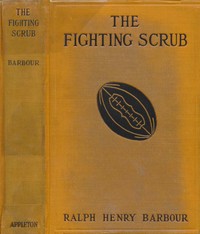
Before opening The Fighting Scrub — Themes and Context, the edition data offers a quick orientation: 75,251 words, 5 hr 28 min estimated reading time, and 30 detected text sections.
The text analysis averages about 15.5 words per sentence, while the detected sections provide another way to judge how the source is divided.
Project Gutenberg metadata also associates the work with “School sports -- Juvenile fiction,” connecting these edition facts with the source record’s subject description.
Explore this collection
These alternatives are selected using recorded categories and estimated reading time.
About 297 minutes
Fantasy Juvenile Worlds
68,289 recorded words. 31 minutes difference from this book's estimate.
View Gutenberg source #72271About 293 minutes
Fantasy Juvenile Worlds
67,210 recorded words. 35 minutes difference from this book's estimate.
View Gutenberg source #72403About 364 minutes
Fantasy Juvenile Worlds
83,531 recorded words. 36 minutes difference from this book's estimate.
View Gutenberg source #76917Search stored excerpts and compare books → Choose by your preferences →
Choices use stored catalog measurements. Estimates vary with reading speed. A shared category is a catalog label, not a claim that two books have the same argument or literary quality.
Search reads excerpt text stored with this catalog and links to its associated Gutenberg record. The connection is stored in the site database; this tool does not recheck that every excerpt is word-for-word identical to that external record. Excerpt search does not cover every chapter and does not verify historical publication dates.
Catalog snapshot checked: 2026-09-25. Coverage: 98 public books, 98 available source excerpts.
Calculated from edition completeness, EPUB availability, text structure and catalogue metadata. Not a user rating.
Total of 100 points, scaled to a 2.5-5.0 range. Editions with an empty description or a missing EPUB file are not scored.
Public-domain source text
The source text is kept in the dedicated reader, separate from this catalogue record and its commentary.
The novel opens with a tightly wound scene: Mr. Bingham checks his watch, avoids his son’s gaze, and speaks with “exaggerated cheerfulness” that fools neither of them. Clif, sixteen, is more afraid of showing emotion than of a firing squad. The prose here is clipped, the lump in the throat almost audible. Barbour establishes a narrator who stays close to Clif’s consciousness, filtering the world through his anxieties and pride. This intimate, slightly ironic voice persists throughout, but the pace shifts markedly once Clif settles into school. The early tension gives way to a more leisurely, observational style, as the narrative lingers on routines, meals, and the slow build of friendships.
The opening chapter moves at a deliberate, almost hesitant pace, mirroring Clif’s reluctance to part from his father. Barbour uses short paragraphs and frequent pauses—the father checking his watch, the boy grateful not to be looked at—to stretch the moment. Once Clif enters the boarding-school world, the tempo changes. Descriptions become more expansive, especially around football practice and the chess games that double as tactical discussions. The narrative slows again during the chess scenes, where the author devotes paragraphs to the players’ psychology and the incremental progress of the game. This alternation between tense, compressed scenes and relaxed, detailed ones gives the novel a distinctive rhythm, one that rewards attention to how time is managed on the page.
Barbour’s narrator rarely editorializes directly. Instead, he lets actions and dialogue reveal character. When Tom concedes a chess match, he says simply, “Heck, you just played better chess, Deane.” The narrator adds only that Tom “refused to take refuge behind the excuses.” This restraint extends to emotional moments: Clif’s lump in the throat is described, but not dwelled upon. The voice is consistently that of a sympathetic observer who knows more than the characters but chooses not to show off. The dialogue carries much of the characterization—Tom’s grudging admiration, Loring’s apologetic wins, Clif’s indignation—and the narrator steps back to let it breathe. This creates a sense of authenticity, as if the reader is overhearing real boys talk.
Certain scenes recur with variations: the chess games, the post-supper visits to Loring’s room, the discussions of football plays. Barbour uses these repetitions to build a sense of habit and intimacy, but he varies the outcome each time. The first chess game is long and detailed; the second is cut short by a mistake; later, the game is abandoned for talk. This structural repetition with difference keeps the narrative from becoming static. The football discussions, too, follow a pattern—diagrams are produced, plays are rehearsed, arguments ensue—but each session reveals new information about the characters’ knowledge and temperaments. The pacing thus mirrors the boys’ own growing comfort: what starts as awkward and uncertain becomes familiar and fluid, until the rhythm of school life feels natural to the reader as well.
Readers attuned to shifts in tempo will find that Barbour uses pace not merely to vary interest but to underscore character development. The early stiffness of Clif’s farewell gives way to the easy camaraderie of the chess-and-football evenings, and the narrative’s own rhythms reflect that change. Pay attention to how long the author dwells on a scene: the more time he spends, the more significant the emotional or strategic stakes. This is a novel that rewards patient reading, one where the quiet moments—a game of chess, a walk back to West Hall—carry as much weight as the action on the field.
Years at this desk have taught me how a book breathes. In The Fighting Scrub, I’ve often lingered on that early farewell—how the tension thins into the steady rhythm of chapel bells and scrimmage lines, a boy finding his footing in noise. It reminds me of another quiet soul, Lore of Proserpine — A Reader’s Guide, which also understands the hush beneath ritual. Both know that belonging is a language spoken slowly.
Use these questions to collect your thoughts before moving on.