About 203 minutes
Worthy of his name — Story, Setting & Ideas
Fantasy Juvenile Worlds
46,670 recorded words. 4 minutes difference from this book's estimate.
View Gutenberg source #73340
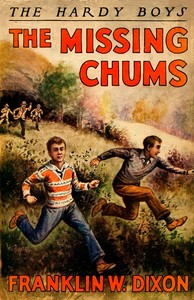
This digital edition of The missing chums — Inside the Classic is described by source-level measurements including 45,664 words, 3 hr 19 min estimated reading time, and 5 detected text sections.
The text analysis averages about 13.1 words per sentence, while the detected sections provide another way to judge how the source is divided.
Project Gutenberg metadata also associates the work with “Brothers -- Juvenile fiction,” connecting these edition facts with the source record’s subject description.
Explore this collection
These alternatives are selected using recorded categories and estimated reading time.
About 203 minutes
Fantasy Juvenile Worlds
46,670 recorded words. 4 minutes difference from this book's estimate.
View Gutenberg source #73340About 193 minutes
Fantasy Juvenile Worlds
44,233 recorded words. 6 minutes difference from this book's estimate.
View Gutenberg source #73528About 206 minutes
Fantasy Juvenile Worlds
47,365 recorded words. 7 minutes difference from this book's estimate.
View Gutenberg source #73596Search stored excerpts and compare books → Choose by your preferences →
Choices use stored catalog measurements. Estimates vary with reading speed. A shared category is a catalog label, not a claim that two books have the same argument or literary quality.
Search reads excerpt text stored with this catalog and links to its associated Gutenberg record. The connection is stored in the site database; this tool does not recheck that every excerpt is word-for-word identical to that external record. Excerpt search does not cover every chapter and does not verify historical publication dates.
Catalog snapshot checked: 2026-09-25. Coverage: 98 public books, 98 available source excerpts.
Calculated from edition completeness, EPUB availability, text structure and catalogue metadata. Not a user rating.
Total of 100 points, scaled to a 2.5-5.0 range. Editions with an empty description or a missing EPUB file are not scored.
Public-domain source text
The source text is kept in the dedicated reader, separate from this catalogue record and its commentary.
The story opens with a group of boys gathered on a motorboat, trading jokes and banter. Frank Hardy ruefully declines an invitation to join Chet Morton and Biff Hooper on a week-long coastal trip, explaining that he and Joe must stay home while their father is in Chicago. Chet’s playful posturing—"Yo, ho, and a bottle of ink!"—is undercut when he loses his balance and sits in grease, prompting Frank to improvise a rhyme. This lighthearted scene establishes the close friendships and the central puzzle: the Hardy Boys are left behind while their chums set off, setting the stage for the mystery of the missing chums.
The first chapter introduces the four main characters through their dialogue and actions. Frank’s rueful grin and Joe’s dramatic declaration of "duty" show the brothers’ bond and their commitment to family obligations. Chet’s clowning—reciting a sailor’s song and then falling—adds humor but also foreshadows the peril that awaits. The motorboat setting, with Biff at the wheel and the coast as a backdrop, establishes the adventure’s nautical theme. Notably, the boys’ easy rapport and the absence of adults (except in reference) create a world where the young protagonists are free to act independently. This opening efficiently sets up the mystery: the chums depart, and soon there will be no word from them.
Later in the story, the Hardy Boys explore a cave on Blacksnake Island. The prose shifts from lighthearted banter to tense, sensory description. Frank uses a pocket flashlight to navigate, but the beam reveals only "damp rock walls" and "inky blackness" beyond. The cave’s scale is emphasized: "the ceiling was scarcely visible" and echoes "flung back and forth." The boys proceed along a narrow ledge, but a misstep on a rolling rock sends Frank sprawling, the flashlight spinning away. In the sudden darkness, Joe clings to Frank’s coat, but both fall into a deep pool. This sequence relies on tactile and auditory details—the clatter of rocks, the splash of water—to create suspense. The fall is a turning point, separating the brothers and testing their resourcefulness.
After plunging into the icy pool, Frank surfaces to find himself alone. His calls for Joe are answered only by echoes that mock him: "Joe.... Joe.... Joe...." The darkness is absolute, described as "no blacker than the darkness of the air above." The brothers swim blindly, groping for the edge, but the rock walls are smooth and vertical. Frank’s despair is palpable: "If they had fallen into a circular pit they were doomed." The rescue comes when his fingers find a rocky projection—a small ledge. He drags himself up and then pulls Joe to safety. This passage highlights the boys’ physical endurance and their reliance on each other. The cave setting, with its treacherous terrain and hidden dangers, becomes a character in itself, shaping the action and raising the stakes.
The excerpts show a clear shift in tone and pacing. The opening chapter is dialogue-heavy, with characters speaking in colloquial, playful language ("You bet we're lucky," "Duty, my neck!"). The narrative voice is brisk, using short paragraphs and frequent exclamations. In contrast, the cave scenes are more descriptive and introspective, with longer sentences and a focus on sensory details. The author uses repetition for effect: "The blackness of the icy pool was no blacker than the darkness of the air above." This variation in style keeps the reader engaged, moving from the comfort of friendship to the isolation of the cave. The structure—beginning with a group, then isolating the brothers—mirrors the mystery’s progression from a simple missing-persons case to a survival ordeal.
Readers approaching The Missing Chums for the first time should pay attention to how the early banter establishes character relationships that later pay off in moments of crisis. The cave sequence, with its emphasis on darkness and physical struggle, rewards close reading of descriptive details. The story balances two threads: the search for the missing chums and the brothers’ own peril. Noting how the author shifts between dialogue and action can deepen appreciation of the craft behind this Hardy Boys adventure.
Reading about Frank and Joe’s quiet trust in each other, there in the dark of that cave, I found myself remembering an old volume, Outlines of English and American Literature An Introduction to the Chief Writers of England and America, to the Books They Wrote, and to the Times in Which They Lived — Reading Notes, and its simple faith that stories are just friends waiting to be found. A strange pairing, perhaps, but both speak of companionship through the dark.
A brief reflection can help important ideas stay with you longer.