About 190 minutes
Contemporary American Literature Bibliographies and Study Outlines — Story, Setting & Ideas
Fantasy Juvenile Worlds
43,639 recorded words. 3 minutes difference from this book's estimate.
View Gutenberg source #18625
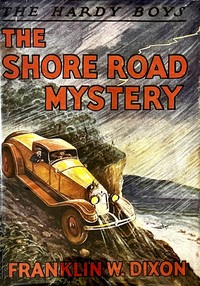
This digital edition of The Shore Road mystery — Background and Themes is described by source-level measurements including 43,008 words, 3 hr 7 min estimated reading time, and 5 detected text sections.
The text analysis averages about 11.8 words per sentence, while the detected sections provide another way to judge how the source is divided.
Project Gutenberg metadata also associates the work with “Brothers -- Juvenile fiction,” connecting these edition facts with the source record’s subject description.
Explore this collection
These alternatives are selected using recorded categories and estimated reading time.
About 190 minutes
Fantasy Juvenile Worlds
43,639 recorded words. 3 minutes difference from this book's estimate.
View Gutenberg source #18625About 190 minutes
Fantasy Juvenile Worlds
43,618 recorded words. 3 minutes difference from this book's estimate.
View Gutenberg source #75310About 193 minutes
Fantasy Juvenile Worlds
44,233 recorded words. 6 minutes difference from this book's estimate.
View Gutenberg source #73528Search stored excerpts and compare books → Choose by your preferences →
Choices use stored catalog measurements. Estimates vary with reading speed. A shared category is a catalog label, not a claim that two books have the same argument or literary quality.
Search reads excerpt text stored with this catalog and links to its associated Gutenberg record. The connection is stored in the site database; this tool does not recheck that every excerpt is word-for-word identical to that external record. Excerpt search does not cover every chapter and does not verify historical publication dates.
Catalog snapshot checked: 2026-09-25. Coverage: 98 public books, 98 available source excerpts.
Calculated from edition completeness, EPUB availability, text structure and catalogue metadata. Not a user rating.
Total of 100 points, scaled to a 2.5-5.0 range. Editions with an empty description or a missing EPUB file are not scored.
Public-domain source text
The source text is kept in the dedicated reader, separate from this catalogue record and its commentary.
The Shore Road Mystery opens with a pattern of thefts that the Hardy boys discuss while riding motorcycles: five cars have vanished along Shore Road over three weeks, all expensive models, and none have been seen entering Bayport. The dialogue establishes the brothers' method—they talk through problems aloud, trading observations and theories. Frank notes that the cars seem to 'vanish into thin air,' a phrase that sets up the central puzzle. The setting is specific: a sunny Saturday afternoon on a road skirting Barmet Bay, where fear of theft has driven away bathers and fishermen. The boys' plan to trap the thieves by hiding in their own car's locker emerges from these conversations, not from adult instruction.
The excerpts rely almost entirely on dialogue to advance the plot. Frank, Joe, and their friend Chet Morton exchange information, speculate, and plan without lengthy narration. For example, Chet remarks that all five cars disappeared 'along the shore,' and Joe notes that the thieves 'certainly have their nerve, working this road for three weeks.' The conversations are colloquial—'I'll say it is,' 'Some thieving, I'll tell the world'—and serve to build a shared picture of the mystery. When the boys later stake out the road, their whispered exchanges ('Looks as if we're out of luck again') maintain the same conversational rhythm. This technique keeps the reader close to the characters' immediate perceptions.
Frank and Joe's stakeout involves hiding in the locker at the back of their roadster. The excerpts describe the physical discomfort: Joe complains his legs are 'so cramped' he doubts he'll 'ever be able to walk straight again.' The confined space forces them to rely on sound—footsteps on the highway, the rumble of a truck, a car roaring past at 'tremendous speed.' When a visitor opens the car door, the boys remain still, realizing that climbing out would be 'folly.' The locker becomes a narrative device that limits what the brothers can see and do, heightening suspense. Their patience is tested: after an hour, then another half-hour, they hear footsteps approach, then recede. The scene ends with Frank sighing, 'I thought sure we had a bite that time. It was only a nibble.'
A recurring element is the dark figure of Gus Montrose, glimpsed along the Shore Road at night. When the brothers first spot him, Frank recognizes him instantly: 'I'd recognize that face anywhere now.' Joe whistles, and Frank speculates Montrose might be connected to the car thefts, calling him 'a rather suspicious sort of character.' The man is described trudging with 'head down, hands thrust deep in his coat pockets.' Later, during a stakeout, an unknown person approaches the car, examines it, and leaves without stealing it—a 'nibble' that frustrates the boys. The excerpts do not reveal Montrose's role, but his repeated appearance and the brothers' focused attention on him create a thread of suspicion that runs through the early chapters.
The excerpts offer a concentrated look at the Hardy boys' investigative style: patient, dialogue-driven, and reliant on physical concealment. Readers may notice how the brothers' banter balances tension with a matter-of-fact tone, and how the Shore Road itself—a liminal space between town and bay—becomes a character in the puzzle. The incomplete nature of the excerpts leaves Montrose's motives and the locker trap's outcome unresolved, inviting attention to how the boys adapt when their initial plan fails.
There’s something about that Shore Road mystery—the way the brothers wait in the dark, trusting what they can’t yet see. It reminded me of another story, one where quiet watching matters just as much. The other Miller girl — Story, Setting & Ideas carries that same patient hush, like a room where someone’s holding their breath. I’ve been thinking about it since.
Create a short personal record of your experience with this book.