About 127 minutes
A song-bird — Reading Notes
Fantasy Juvenile Worlds
29,111 recorded words. 1 minutes difference from this book's estimate.
View Gutenberg source #72274
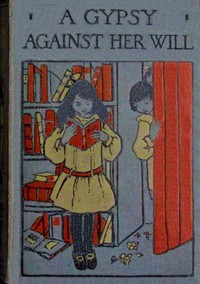
Before opening A gypsy against her will — Story, Setting & Ideas, the edition data offers a quick orientation: 29,330 words, 2 hr 8 min estimated reading time, and 3 detected text sections.
The text analysis averages about 21.9 words per sentence, while the detected sections provide another way to judge how the source is divided.
Project Gutenberg metadata also associates the work with “Conduct of life -- Juvenile fiction,” connecting these edition facts with the source record’s subject description.
Explore this collection
These alternatives are selected using recorded categories and estimated reading time.
About 127 minutes
Fantasy Juvenile Worlds
29,111 recorded words. 1 minutes difference from this book's estimate.
View Gutenberg source #72274About 130 minutes
Fantasy Juvenile Worlds
29,785 recorded words. 2 minutes difference from this book's estimate.
View Gutenberg source #77065About 142 minutes
Fantasy Juvenile Worlds
32,649 recorded words. 14 minutes difference from this book's estimate.
View Gutenberg source #23751Search stored excerpts and compare books → Choose by your preferences →
Choices use stored catalog measurements. Estimates vary with reading speed. A shared category is a catalog label, not a claim that two books have the same argument or literary quality.
Search reads excerpt text stored with this catalog and links to its associated Gutenberg record. The connection is stored in the site database; this tool does not recheck that every excerpt is word-for-word identical to that external record. Excerpt search does not cover every chapter and does not verify historical publication dates.
Catalog snapshot checked: 2026-09-25. Coverage: 98 public books, 98 available source excerpts.
Calculated from edition completeness, EPUB availability, text structure and catalogue metadata. Not a user rating.
Total of 100 points, scaled to a 2.5-5.0 range. Editions with an empty description or a missing EPUB file are not scored.
Public-domain source text
The source text is kept in the dedicated reader, separate from this catalogue record and its commentary.
The novel opens with a domestic argument that immediately establishes Lizzie Betts as a girl who "won't put up with" perceived slights. Her mother, Mrs. Betts, irons shirts while countering Lizzie's complaints about service with quiet pragmatism: "a girl never does any good for herself who is always changing." The scene is built on the rhythm of work—the hot iron lifted from the fire, the fine white shirt smoothed—and on the tension between Lizzie's desire for independence and her mother's insistence on endurance. This friction, rendered through naturalistic dialogue rather than authorial commentary, sets the stage for Lizzie's later captivity among traveling showpeople, where her literacy and historical knowledge become liabilities.
Leslie distinguishes characters through their speech patterns. Lizzie's imperative tone—"NO, I won't put up with it"—contrasts with her mother's measured replies, which often begin with "Now, Lizzie, be reasonable." The mother's language is full of conditional clauses and appeals to necessity: "if you had kept all the time in your first place you would have been worth something." Later, Mrs. Stanley's coarse threats—"I'll give you such a taste of horsewhip"—reveal a different kind of authority, one that relies on physical intimidation rather than moral reasoning. The shift from domestic negotiation to coercive command is marked by a coarsening of vocabulary: Lizzie's polite remonstrances are met with "roared" and "nasty obstinate hussy."
The wax-work exhibition becomes a stage for a battle over historical truth. Mrs. Stanley, who cannot read, delivers "jumbled-up" accounts of the figures, while Lizzie, drawing on Sunday-school library books, knows that Lady Jane Grey was beheaded on Tower Hill—not, as Mrs. Stanley insists, that she tried to kill Queen Mary. The show's historical inaccuracies are not mere errors; they are a system of control. Lizzie is forced to repeat "garbled accounts" under threat of the cane. Leslie underscores the irony: the show's audience receives a version of history that is entirely fabricated, and Lizzie's literacy, which should be an asset, becomes a source of punishment. The episode suggests that knowledge is only as powerful as the freedom to express it.
Leslie embeds Lizzie's captivity in physical sensations. After days of bread and dripping, a dinner of "beef-steak and new bread" feels like a reprieve. The fairground atmosphere is rendered through smell: "sawdust and paraffin fumes." When the lamps are lit and the back door closed, the space becomes claustrophobic. Lizzie's earlier disgust at the "faded red curtain" returns as she recalls her first encounter with the show. These sensory anchors—hunger, smell, confinement—make the abstract condition of imprisonment concrete. The reader experiences the world through Lizzie's body: the ache of a threatened horsewhipping, the shiver at a tyrannical glare, the relief of a full stomach. This physicality grounds the moral drama in material reality.
Every exchange in the excerpts is a negotiation of power. Lizzie's opening demand—"why should I have to put up with people's crossness?"—is met with her mother's weary pragmatism. Later, Mrs. Stanley's commands are absolute: "just do as you're told, and learn the lesson as it's taught yer." Lizzie's attempts to correct historical errors are met with escalating violence: first a scornful retort, then a cane cut, then the threat of a horsewhipping. The dialogue reveals character through rhythm and word choice. Mrs. Betts uses conditional sentences and appeals to social norms; Mrs. Stanley uses imperatives and threats. Lizzie's own speech shifts from assertive to shrinking as she "caught sight of the angry glare." Leslie uses these vocal shifts to map the trajectory of Lizzie's subjugation.
Readers should attend to the way Leslie uses the wax-work show as a metaphor for the construction of authority. The show's historical fabrications are not merely comic; they expose how power can rewrite truth. Lizzie's literacy—her ability to read and remember—is both her strength and her vulnerability. The novel does not resolve whether she will escape or be broken; the excerpts leave her in a state of forced acquiescence. This ambiguity is deliberate, inviting readers to consider the cost of resistance in a world where knowledge is punished.
Reading Emma Leslie’s sharp, uneasy scenes of that captive servant girl, I found myself thinking of quieter corners in Laddie, and Miss Toosey's mission — Key Ideas to Explore. Both feel like old photographs—posed, slightly faded, yet alive with the weight of unspoken rules. Her wax-work deception reminded me of its gentle, patient reckonings with belonging and truth, whispered rather than shouted. Strange, how different stories can echo the same small ache.
Create a short personal record of your experience with this book.