About 128 minutes
A gypsy against her will — Story, Setting & Ideas
Fantasy Juvenile Worlds
29,330 recorded words. 1 minutes difference from this book's estimate.
View Gutenberg source #73098
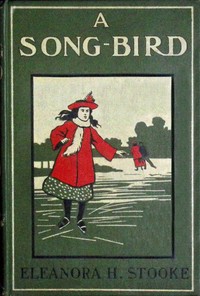
The catalog record for A song-bird — Reading Notes provides practical reading context through 29,111 words, 2 hr 7 min estimated reading time, and 3 detected text sections.
The text analysis averages about 15.6 words per sentence, while the detected sections provide another way to judge how the source is divided.
Project Gutenberg metadata also associates the work with “Christian life -- Juvenile fiction,” connecting these edition facts with the source record’s subject description.
Explore this collection
These alternatives are selected using recorded categories and estimated reading time.
About 128 minutes
Fantasy Juvenile Worlds
29,330 recorded words. 1 minutes difference from this book's estimate.
View Gutenberg source #73098About 130 minutes
Fantasy Juvenile Worlds
29,785 recorded words. 3 minutes difference from this book's estimate.
View Gutenberg source #77065About 114 minutes
Fantasy Juvenile Worlds
26,087 recorded words. 13 minutes difference from this book's estimate.
View Gutenberg source #76694Search stored excerpts and compare books → Choose by your preferences →
Choices use stored catalog measurements. Estimates vary with reading speed. A shared category is a catalog label, not a claim that two books have the same argument or literary quality.
Search reads excerpt text stored with this catalog and links to its associated Gutenberg record. The connection is stored in the site database; this tool does not recheck that every excerpt is word-for-word identical to that external record. Excerpt search does not cover every chapter and does not verify historical publication dates.
Catalog snapshot checked: 2026-09-25. Coverage: 98 public books, 98 available source excerpts.
Calculated from edition completeness, EPUB availability, text structure and catalogue metadata. Not a user rating.
Total of 100 points, scaled to a 2.5-5.0 range. Editions with an empty description or a missing EPUB file are not scored.
Public-domain source text
The source text is kept in the dedicated reader, separate from this catalogue record and its commentary.
The first chapter of A Song-Bird introduces Mavis Grey, a ten-year-old girl with hazel eyes and untidy brown curls, in a London lodging-house on a September evening. Her mother, a widow and trained nurse, has just written a letter that leaves her grave and sad. The dialogue reveals their financial strain and Mrs. Grey's decision to nurse a consumptive young lady, which will separate them. Mavis's instinctive singing—she sings like a bird—is hinted at as a comfort to others, but the opening focuses on the mother's sacrifice and the child's anxiety. The setting is dingy and dark, contrasting with the warmth of their conversation.
The opening excerpt establishes a close mother-daughter bond through natural dialogue. Mavis notices her mother's sadness and asks, 'There's nothing very much amiss, is there, mother?' The mother admits they have little money left but has accepted a nursing post. The letter she writes is not shown, but its emotional weight is clear. The scene is confined to an upstairs sitting-room, emphasizing their isolation. Mrs. Grey is described as 'self-reliant' and 'brave,' yet Mavis observes her tears. This early tension—the impending separation—drives the narrative forward. The reader learns that Mavis's father was a curate and that her mother had been a nurse before marriage. The excerpt ends with Mrs. Grey's decision, leaving Mavis's future uncertain.
In a later excerpt, Mavis walks with the Vicar, Mr. Moseley, and his dog Max. She confides her unease about her Aunt Lizzie, whom she 'never can quite like.' The Vicar gently probes, and Mavis reveals that Aunt Lizzie called her 'superficial.' The Vicar reassures her, saying her aunt is mistaken. He then proposes a concert during Christmas week and asks Mavis to sing. He has heard her singing the twenty-third psalm in the woods. Mavis is nervous but agrees when the Vicar frames her voice as a gift from God meant for others. This moment connects her singing to the earlier comfort she gave Miss Dawson, the sick girl. The Vicar quotes Longfellow: 'That they might touch the hearts of men, And bring them back to heaven again.' Mavis's response shows her growing understanding of her talent.
The excerpts trace Mavis's singing from an instinctive act to a purposeful one. In the opening, she sings 'like the bird after which she had been named' without thought. Later, the Vicar's words reframe her voice as a 'great gift' to be used for others. Mavis recalls Miss Dawson's gratitude for the psalm she sang, which gave comfort. The narrative suggests that her singing is a natural talent, not formally taught—she cannot sing with a piano. The Vicar's request is specific: he wants her to sing unaccompanied, as she did in the woods. This detail underscores the organic, unpolished quality of her gift. The excerpts do not reveal whether she performs at the concert, but her willingness marks a shift from shyness to acceptance of responsibility.
The story moves from a London lodging-house to a village with a vicarage and a Mill House. The contrast is sharp: the opening is urban and dingy, while later scenes involve woods and a schoolroom concert. The social world includes a vicar, aunts, uncles, and cousins. Mavis's Aunt Lizzie is a source of tension, dismissing her as 'superficial.' The Vicar, Mr. Moseley, is a supportive figure who mediates between Mavis and her aunt. The excerpts hint at class and religious undertones: Mrs. Grey is a nurse, the Vicar quotes Longfellow, and the concert is for the villagers. The title A Song-Bird aligns Mavis with nature and innocence, but the excerpts show her navigating adult judgments and expectations.
The excerpts position Mavis's singing as both a natural gift and a source of moral purpose. Readers may observe how the narrative balances domestic realism with didactic elements typical of early twentieth-century juvenile fiction. The incomplete excerpts leave Mavis's concert performance and her relationship with Aunt Lizzie unresolved, inviting speculation about her growth. Pay attention to how Stooke uses dialogue to reveal character and how the setting shifts from city to village reinforce Mavis's journey.
I kept thinking about Mavis’s mother, how quietly she watched her daughter’s gift unfold, never pushing, just being there. That same steady presence seems to linger in Ready, aye ready! — Key Ideas to Explore, as if readiness itself were a kind of patient listening. Both books feel like small rooms where someone has left the window open, letting a song drift through. Strange how one story leads to another without ever saying a word.
Capture what you thought, learned, and would like to remember.