About 128 minutes
A gypsy against her will — Story, Setting & Ideas
Fantasy Juvenile Worlds
29,330 recorded words. 2 minutes difference from this book's estimate.
View Gutenberg source #73098
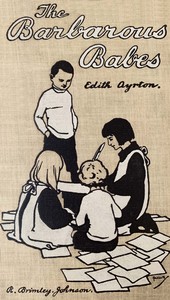
This digital edition of The barbarous babes — Key Ideas to Explore is described by source-level measurements including 29,785 words, 2 hr 10 min estimated reading time, and 12 detected text sections.
The text analysis averages about 19.9 words per sentence, while the detected sections provide another way to judge how the source is divided.
Project Gutenberg metadata also associates the work with “Siblings -- Juvenile fiction,” connecting these edition facts with the source record’s subject description.
Explore this collection
These alternatives are selected using recorded categories and estimated reading time.
About 128 minutes
Fantasy Juvenile Worlds
29,330 recorded words. 2 minutes difference from this book's estimate.
View Gutenberg source #73098About 127 minutes
Fantasy Juvenile Worlds
29,111 recorded words. 3 minutes difference from this book's estimate.
View Gutenberg source #72274About 142 minutes
Fantasy Juvenile Worlds
32,649 recorded words. 12 minutes difference from this book's estimate.
View Gutenberg source #23751Search stored excerpts and compare books → Choose by your preferences →
Choices use stored catalog measurements. Estimates vary with reading speed. A shared category is a catalog label, not a claim that two books have the same argument or literary quality.
Search reads excerpt text stored with this catalog and links to its associated Gutenberg record. The connection is stored in the site database; this tool does not recheck that every excerpt is word-for-word identical to that external record. Excerpt search does not cover every chapter and does not verify historical publication dates.
Catalog snapshot checked: 2026-09-25. Coverage: 98 public books, 98 available source excerpts.
Calculated from edition completeness, EPUB availability, text structure and catalogue metadata. Not a user rating.
Total of 100 points, scaled to a 2.5-5.0 range. Editions with an empty description or a missing EPUB file are not scored.
Public-domain source text
The source text is kept in the dedicated reader, separate from this catalogue record and its commentary.
Molly, aged ten, opens her memoir by declaring that she and Humphrey “generally play at torturing games.” The first chapter, “The Martyrdom of Humphrey,” sets the tone: the children reenact scenes from The Tower of London and Pirates of Algiers, with Humphrey driving rusty screws into Molly’s chest and lashing her with a waxed thong. Yet the cruelty is tempered by Humphrey’s peculiar sensitivity—he stops because “by now you must be dead,” and later licks his own tears because “they are good for the digestion.” This blend of macabre play and matter-of-fact tenderness defines the narrative voice.
Molly introduces herself as “the only one that has to use two figures for their age,” a detail that immediately establishes her pride in being the eldest. She is ten; Humphrey is nine but “very backward,” unable to read and prone to weeping silently when faced with long division. The narrator’s voice is precise about hierarchies: she invents the tortures because she reads the books; Humphrey executes them. Yet her authority is undercut by her own vulnerability. When she mistakenly placards a German guest in the bathroom, her legs go “wiggle-waggle” and she feels “a pain inside.” The same child who orchestrates elaborate punishments crumples under her father’s rage, barricading herself in a bedroom that “doesn’t lock, for Humphrey lost the key once when we were wicked gaolers of the Tower.” The narrative consistently pairs control with collapse.
Humphrey is described through a series of contradictions. He cannot read, yet he invents a red ink that “made holes right through his copy-book” and then repurposes it as medicine. He uses long words like “enervating” that make adults laugh, then gets sulky. His crying is silent, with tears that “come dripping down slowly with a plop,” and he licks them up because he plans to be a doctor. When Molly is punished for the bathroom incident, Humphrey climbs in at the window, strokes her hand, and shoves a peppermint into it. Later he confesses to the German musician, saying simply, “It was my toe-nails.” The text presents his backwardness not as a deficit but as a different kind of intelligence—one that bypasses reading and social convention to arrive at direct, practical kindness.
The domestic setting is a constant source of tension. Father is a distant, explosive authority who “always gets up much later” and delivers verdicts like “your conceit is perfectly insufferable.” Mother is invoked as a longed-for comforter, but she appears only in promises and memories. The children’s world is governed by their own rules: placards in red ink, games that end in real tears, and a lost key that turns a bedroom into a prison. The German musician, a “most celebrated” guest, becomes an unwitting antagonist when Molly mistakes him for Humphrey. The household is porous—visitors, maids’ chatter, and parental anger intrude on the children’s elaborate fictions. The memoir’s comedy depends on this collision between the ordered adult world and the barbarous logic of childhood.
Molly’s vocabulary reveals her age and her milieu. She uses “tortury” as an adjective, describes Humphrey as “’straordinarily sensible,” and reports that the German gentleman shouted “Unverschämtes Fraunzimmer” without understanding it. These linguistic markers—the invented words, the misheard phrases, the formal constructions (“I do not think I have ever seen him so angry”)—create a voice that is both sophisticated and naive. The narrative never condescends to Molly, even when she is wrong. Her misery after the scolding is rendered in physical terms: “I cried awfully until everything got quite dizzy.” The text trusts its young narrator to report accurately on her own feelings, even when those feelings are contradictory or disproportionate.
The excerpts end before the later chapters—titled “Samson and Delilah,” “Violet’s Visit,” “The Whipping of Teddy,” and “Mother”—but the pattern is already clear: each episode will likely test the children’s makeshift morality against adult expectations. Readers should attend to the gap between what Molly says and what she shows, and to Humphrey’s quiet interventions. The memoir’s title, The Barbarous Babes, is both ironic and sincere.
Reading about Molly and Humphrey’s chaotic games reminded me of that strange, quiet ache in old stories—how childhood cruelty and tenderness sit so close together. I happened to think of Turkish Literature; Comprising Fables, Belles-lettres, and Sacred Traditions — Text and Context, where fables carry that same weight of hidden lessons, lingering long after the telling ends.
Capture what you thought, learned, and would like to remember.