About 146 minutes
Laddie, and Miss Toosey's mission — Key Ideas to Explore
Fantasy Juvenile Worlds
33,401 recorded words. 7 minutes difference from this book's estimate.
View Gutenberg source #73760
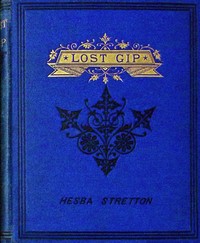
This digital edition of Lost Gip — A Closer Reading is described by source-level measurements including 35,023 words, 2 hr 33 min estimated reading time, and 4 detected text sections.
The text analysis averages about 19.2 words per sentence, while the detected sections provide another way to judge how the source is divided.
Project Gutenberg metadata also associates the work with “Christian life -- Juvenile fiction,” connecting these edition facts with the source record’s subject description.
Explore this collection
These alternatives are selected using recorded categories and estimated reading time.
About 146 minutes
Fantasy Juvenile Worlds
33,401 recorded words. 7 minutes difference from this book's estimate.
View Gutenberg source #73760About 142 minutes
Fantasy Juvenile Worlds
32,649 recorded words. 11 minutes difference from this book's estimate.
View Gutenberg source #23751About 130 minutes
Fantasy Juvenile Worlds
29,785 recorded words. 23 minutes difference from this book's estimate.
View Gutenberg source #77065Search stored excerpts and compare books → Choose by your preferences →
Choices use stored catalog measurements. Estimates vary with reading speed. A shared category is a catalog label, not a claim that two books have the same argument or literary quality.
Search reads excerpt text stored with this catalog and links to its associated Gutenberg record. The connection is stored in the site database; this tool does not recheck that every excerpt is word-for-word identical to that external record. Excerpt search does not cover every chapter and does not verify historical publication dates.
Catalog snapshot checked: 2026-09-25. Coverage: 98 public books, 98 available source excerpts.
Calculated from edition completeness, EPUB availability, text structure and catalogue metadata. Not a user rating.
Total of 100 points, scaled to a 2.5-5.0 range. Editions with an empty description or a missing EPUB file are not scored.
Public-domain source text
The source text is kept in the dedicated reader, separate from this catalogue record and its commentary.
From its first paragraph, Lost Gip immerses the reader in the physical reality of London's East End: narrow streets, choked kennels, rotting fruit, and half-famished children. The narrator's eye lingers on details—the 'busy spirit-vault,' the 'dead level of misery'—that establish a world where infant mortality is so routine that 'babies' funerals are so frequent they excite no notice.' This is not a backdrop but a character in itself, shaping every action and belief.
Stretton's prose shifts between this stark reportage and the intimate, dialect-laced speech of her characters. Sandy, the boy searching for his lost sister Gip, speaks in a vernacular that marks his class and experience, while the narrator's own voice carries a moral urgency that never tips into sentimentality. The tension between these registers—the objective and the personal—drives the novel's exploration of faith and doubt.
Stretton's descriptive vocabulary is precise and unflinching. She writes of 'kennels bordering the side pavements' choked with refuse, of 'heaps of rotting fruit, potato-parings, and decaying cabbage-leaves' that children 'eagerly turn over and over in search of a prize.' The word 'prize' is telling: it reframes scavenging as a desperate game, highlighting the children's normalized hunger. The air carries 'scents' that are 'the very reverse of sweet,' a deliberate negation that refuses euphemism. Later, the narrator notes that 'half the children born in them die before they have lived out their twelve months of misery'—the clinical phrasing ('twelve months of misery') undercuts any sentimental view of infancy. These choices build a world where physical detail carries moral weight.
Sandy's speech is rendered in a consistent dialect that marks him as uneducated but not unintelligent. He says, 'I were beginnin' to be glad again, I were; but now, if it's not true, Gip's lost, and mother's lost, and there's nobody to care a straw about it.' The double 'I were' and the dropped 'g' are not mere decoration; they signal his social position and his emotional directness. In contrast, Mr. Shafto's dialogue is standard English, but his internal monologue reveals a similar struggle: 'If it was true that God was beside him, what a miserable fool he had been all his life!' Stretton uses dialect to distinguish characters without condescension, allowing Sandy's plain speech to carry the novel's deepest theological questions.
The narrative alternates between an omniscient third-person voice and passages of free indirect discourse that enter characters' minds. In chapter XI, the narrator reports that 'a strange, new sense of shame smote the conscience of Mr. Shafto,' then slides into his thoughts: 'If God had been hearing, day after day, his fretful murmurings...' This technique blurs the line between external description and internal experience. Stretton also uses direct dialogue to stage debates about faith, as when Sandy confronts Mr. Shafto: 'If it ain't true... there's nobody taking care of little Gip.' The structure thus mirrors the novel's central tension—between a world of observable suffering and the possibility of unseen care.
The word 'lost' appears in the title and echoes throughout the excerpts. Sandy speaks of Gip as 'lost,' but also of his mother, and eventually of himself: 'there's nobody to care a straw about it.' Mr. Shafto, in his moment of awakening, concludes that 'he was as much lost as poor little Gip or Sandy's drunken mother.' The motif expands from a literal missing child to a spiritual condition. Stretton ties this to the biblical language of seeking: Sandy hopes for an 'unseen Friend seeking him and little Gip,' while Mr. Shafto imagines 'the Lord come seeking him.' The physical setting—alleys 'shut out of sight,' a city where children 'follow the little coffin to the end of their own alley'—reinforces the idea of being hidden or abandoned.
Readers attentive to Stretton's craft will notice how she uses the physical environment as a moral stage, where every rotting cabbage leaf and choked kennel becomes evidence in a debate about divine care. The dialect is not ornament but argument, and the shifting narrative voice—now detached, now intimate—keeps the reader suspended between reportage and prayer. Lost Gip rewards those who listen for the weight of each word and the silence between speeches.
There are books that stay with me less like stories and more like weather—a damp, persistent fog. Lost Gip was that for me, its East End streets and a child’s raw questions about faith settling somewhere quiet. It reminded me of how Hidden seed — Text and Context lingers too, with that same patient attention to what people say underneath their words.
A brief reflection can help important ideas stay with you longer.