About 112 minutes
Miles Lawson — Key Ideas to Explore
Fantasy Juvenile Worlds
25,657 recorded words. 1 minutes difference from this book's estimate.
View Gutenberg source #72740
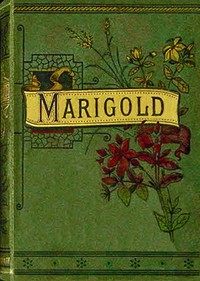
Marigold's decision — Themes and Context can be approached with a clearer sense of reading commitment from its source measurements: 25,842 words, 1 hr 53 min estimated reading time, and 3 detected text sections.
The text analysis averages about 12.5 words per sentence, while the detected sections provide another way to judge how the source is divided.
Project Gutenberg metadata also associates the work with “Christian life -- Juvenile fiction,” connecting these edition facts with the source record’s subject description.
Explore this collection
These alternatives are selected using recorded categories and estimated reading time.
About 112 minutes
Fantasy Juvenile Worlds
25,657 recorded words. 1 minutes difference from this book's estimate.
View Gutenberg source #72740About 114 minutes
Fantasy Juvenile Worlds
26,087 recorded words. 1 minutes difference from this book's estimate.
View Gutenberg source #76694About 103 minutes
Fantasy Juvenile Worlds
23,512 recorded words. 10 minutes difference from this book's estimate.
View Gutenberg source #73331Search stored excerpts and compare books → Choose by your preferences →
Choices use stored catalog measurements. Estimates vary with reading speed. A shared category is a catalog label, not a claim that two books have the same argument or literary quality.
Search reads excerpt text stored with this catalog and links to its associated Gutenberg record. The connection is stored in the site database; this tool does not recheck that every excerpt is word-for-word identical to that external record. Excerpt search does not cover every chapter and does not verify historical publication dates.
Catalog snapshot checked: 2026-09-25. Coverage: 98 public books, 98 available source excerpts.
Calculated from edition completeness, EPUB availability, text structure and catalogue metadata. Not a user rating.
Total of 100 points, scaled to a 2.5-5.0 range. Editions with an empty description or a missing EPUB file are not scored.
Public-domain source text
The source text is kept in the dedicated reader, separate from this catalogue record and its commentary.
Agnes Giberne's Marigold's Decision (1896) opens with a shouted name and a slammed tool-bag, immediately establishing a household governed by impatience and scarcity. The Plunkett home is a 'rattle-trap' where nails cannot hold and paper peels from damp walls—a physical manifestation of the family's frayed tempers. From this cramped setting, the narrative repeatedly moves to the Vicarage nursery, a 'big low room' with picture-covered walls and toy-strewn floors. These contrasting spaces structure the novel: each shift between them marks a change in Marigold's emotional weather, from the vinegar of her mother's complaints to the warmth of the children's welcomes.
The Plunkett home is described with precise, unflattering detail: 'lath and plaster walls, from which paper peeled and damp exuded.' This is not mere scene-setting; the house's fragility mirrors the family's relationships. Josiah Plunkett's voice 'made the walls of the little house to ring,' while his wife's speech is 'sour' and her expression 'acidity.' Giberne uses a striking metaphor: 'all the sweetness which once existed in her had been turned to vinegar.' The mother's refusal to prepare food—'nothing ready for you, nothing at all!'—becomes a weapon. Marigold moves through this environment as a buffer, her patience 'worn to a shred' by her mother's irritability. The physical decay of the house and the emotional decay of the household are presented as parallel, each reinforcing the other.
In contrast to the Plunkett home, the Vicarage nursery is a realm of order and abundance. It has 'three windows, plenty of cupboards, picture-covered walls, and generally toy-strewn floor.' The children eagerly await Marigold, and tea includes 'cakes and jam as a treat.' Here, the narrative slows; meals are 'merry,' and Nurse offers practical wisdom. The character Narcissus, who has left the Plunkett household, visibly thrives: she has 'colour in her cheeks' and has 'gained in plumpness.' Old Nurse attributes this to 'regular living, and regular food, and plenty of fresh air, and plenty to do.' The Vicarage functions as a space where Marigold can momentarily set aside her worries, but the text makes clear that this relief is temporary—she must return home.
The novel's structure depends on Marigold's physical journeys between the two settings. These transitions are marked by small, telling details: she 'vanished swiftly' to fetch eggs, or stays 'a good two hours' at the Vicarage after tea. The movement is not just spatial but emotional. At home, she is called 'Marigold' by her father but 'Mary' by her mother—a subtle renaming that signals her mother's refusal to accept her daughter's chosen identity. At the Vicarage, she is 'their especial favourite.' The narrative uses these shifts to create a rhythm of tension and release. When Marigold returns home, the reader knows the cramped walls and sharp voices await. The journey itself becomes a structural device, emphasizing that Marigold's 'decision' will involve choosing which world she belongs to.
Two motifs recur across the excerpts: food and the quality of voices. At home, food is scarce and weaponized—'no cheese, nor bread, nor nothing left—only a bit of butter.' At the Vicarage, tea is laid with 'cakes and jam.' Marigold's mother speaks in a 'sour voice,' while her father shouts with 'vigour.' In contrast, the Vicarage children's voices are 'mischievous' and affectionate. Giberne uses these contrasts to build a sensory map of Marigold's world. The reader can almost hear the difference between the 'clapper of a bell' at home and the laughter at the Vicarage. These recurring details do not merely decorate the text; they form a pattern that makes Marigold's eventual choice legible without needing to state it explicitly.
Because the excerpts cover only the opening chapters, the full arc of Marigold's 'decision' remains unknown. What is clear is that Giberne builds her story not through dramatic incident but through the accumulation of small, telling contrasts: a damp wall versus a sunny nursery, a withheld meal versus a shared tea. Readers attentive to these structural and imagistic patterns will find the novel's moral questions embedded in its very fabric.
Years among these shelves, I’ve often noticed how Marigold’s Decision breathes its quiet longing between cramped rooms and open vicarage windows—that ache for space, for air. The same tender restlessness lives in And both were young — A Reader’s Guide, where youth’s small confines soften into something wider. They sit apart, yet seem to nod to one another.
Use these questions to collect your thoughts before moving on.