About 113 minutes
Marigold's decision — Themes and Context
Fantasy Juvenile Worlds
25,842 recorded words. 1 minutes difference from this book's estimate.
View Gutenberg source #73955
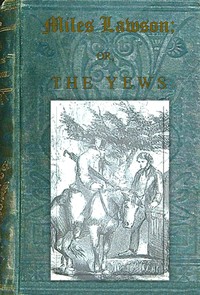
For Miles Lawson — Key Ideas to Explore, the stored edition analysis reports 25,657 words, 1 hr 52 min estimated reading time, and 3 detected text sections.
The text analysis averages about 23.6 words per sentence, while the detected sections provide another way to judge how the source is divided.
Project Gutenberg metadata also associates the work with “Christian life -- Juvenile fiction,” connecting these edition facts with the source record’s subject description.
Explore this collection
These alternatives are selected using recorded categories and estimated reading time.
About 113 minutes
Fantasy Juvenile Worlds
25,842 recorded words. 1 minutes difference from this book's estimate.
View Gutenberg source #73955About 114 minutes
Fantasy Juvenile Worlds
26,087 recorded words. 2 minutes difference from this book's estimate.
View Gutenberg source #76694About 103 minutes
Fantasy Juvenile Worlds
23,512 recorded words. 9 minutes difference from this book's estimate.
View Gutenberg source #73331Search stored excerpts and compare books → Choose by your preferences →
Choices use stored catalog measurements. Estimates vary with reading speed. A shared category is a catalog label, not a claim that two books have the same argument or literary quality.
Search reads excerpt text stored with this catalog and links to its associated Gutenberg record. The connection is stored in the site database; this tool does not recheck that every excerpt is word-for-word identical to that external record. Excerpt search does not cover every chapter and does not verify historical publication dates.
Catalog snapshot checked: 2026-09-25. Coverage: 98 public books, 98 available source excerpts.
Calculated from edition completeness, EPUB availability, text structure and catalogue metadata. Not a user rating.
Total of 100 points, scaled to a 2.5-5.0 range. Editions with an empty description or a missing EPUB file are not scored.
Public-domain source text
The source text is kept in the dedicated reader, separate from this catalogue record and its commentary.
The opening description of the homestead at The Yews is deliberately unhurried, dwelling on the whitewashed walls, the ancient jasmine, and the two enormous yew trees that give the house its name. The narrator notes that the yews are so old they 'never seem to grow older,' a phrase that establishes a sense of permanence against which the story's crises will be measured. This careful attention to the physical setting—the low, mullioned windows, the peat smoke, the flagged path—creates a world that feels both real and emblematic. The yews themselves, described as 'sombre giants,' cast a 'dim twilight' even at midday, hinting at the shadows that will fall over the household.
The homestead is presented as a place of ritual and continuity: whitewashed 'at every Whitsuntide Scrow,' with a stone porch bearing the date 1559. Yet the surrounding mountains are repeatedly described in terms of threat—'crags which overhang,' 'snowy battlements,' 'the Old Man' as a destination that requires forcing a way through drifts. The tension between the sheltered valley and the exposed fells is central to the excerpts. When Miles disappears, the search party must read the snow for signs, and only the shepherd's eye can detect 'sores in the snow, which have healed over.' The narrative voice treats the mountain as a character with its own dangers, while the yews remain unchanged, a silent witness.
The dialogue is marked by regional speech patterns that distinguish the characters. Geordie Garthwaite says 'Seems to me that young master is kind, like, to Scarf Beck Bella,' and later refers to 'an old man's mind upon it.' Mark Wilson uses the intimate second-person singular 'thou' when comforting Alice: 'thou must trust me, as thou would'st a brother.' These linguistic choices ground the story in a specific place—Westmoreland—and create a sense of a close-knit community where everyone knows each other's business. The narrator also glosses the word 'Scrow' in a footnote, signaling that the text is aware of its own regional specificity and is willing to explain it without abandoning the dialect.
When Alice and Mark discover Miles's empty bed, the prose avoids melodrama. Alice sobs, but Mark's response is practical: he notes that Miles took his 'comforter' and gloves, and infers that 'he wasn't desperate' because he acted 'orderly.' The mother's grief is rendered with similar restraint—'no wringing of hands, no tearing of hair'—only a request for her book and a quiet statement about needing 'every promise I can find.' The emotional weight is carried by small, concrete details: the untouched bed, the missing hat and plaid, the knitted gloves. This understatement makes the danger feel more real than any outburst would.
Readers will find that the novel's power lies not in dramatic action but in the accumulation of precise, homely details. The yew trees, the peat fire, the dialect, and the careful tracking of footsteps in snow all work together to create a world that feels both fragile and enduring. Pay attention to how the narrator uses the landscape to mirror inner states, and how the community's shared language and knowledge become a form of rescue. The story rewards a slow, attentive reading—one that matches the pace of its own deliberate prose.
Reading about the yews at the Westmoreland homestead, I thought how the mountain’s shadow looms over even the most settled hearth. That same hush, that intermingling of wildness with domestic quiet, drifted back to me from The barbarous babes — Key Ideas to Explore. It holds a similar tension, I recall, though the landscape is entirely different. There’s a shared pulse there.
A brief reflection can help important ideas stay with you longer.