About 258 minutes
The Burial of the Guns — A Closer Reading
Historical Psychological Social Fiction
59,159 recorded words. 2 minutes difference from this book's estimate.
View Gutenberg source #332
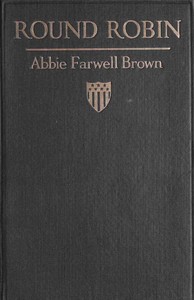
Before opening Round Robin — Text and Context, the edition data offers a quick orientation: 58,775 words, 4 hr 16 min estimated reading time, and 30 detected text sections.
The text analysis averages about 11.9 words per sentence, while the detected sections provide another way to judge how the source is divided.
Project Gutenberg metadata also associates the work with “Camps -- Juvenile fiction,” connecting these edition facts with the source record’s subject description.
Explore this collection
These alternatives are selected using recorded categories and estimated reading time.
About 258 minutes
Historical Psychological Social Fiction
59,159 recorded words. 2 minutes difference from this book's estimate.
View Gutenberg source #332About 252 minutes
Historical Psychological Social Fiction
57,850 recorded words. 4 minutes difference from this book's estimate.
View Gutenberg source #76984About 229 minutes
Historical Psychological Social Fiction
52,574 recorded words. 27 minutes difference from this book's estimate.
View Gutenberg source #68916Search stored excerpts and compare books → Choose by your preferences →
Choices use stored catalog measurements. Estimates vary with reading speed. A shared category is a catalog label, not a claim that two books have the same argument or literary quality.
Search reads excerpt text stored with this catalog and links to its associated Gutenberg record. The connection is stored in the site database; this tool does not recheck that every excerpt is word-for-word identical to that external record. Excerpt search does not cover every chapter and does not verify historical publication dates.
Catalog snapshot checked: 2026-09-25. Coverage: 98 public books, 98 available source excerpts.
Calculated from edition completeness, EPUB availability, text structure and catalogue metadata. Not a user rating.
Total of 100 points, scaled to a 2.5-5.0 range. Editions with an empty description or a missing EPUB file are not scored.
Public-domain source text
The source text is kept in the dedicated reader, separate from this catalogue record and its commentary.
The motto of the Round Robin club, as voiced by Nancy after her risky eagle-climbing episode, is 'keep together'—a rule she violates both horizontally and vertically. This tension between individual daring and group cohesion runs through the excerpts, where the girls' adventures are constantly shadowed by adult warnings and the need for mutual care. The story, set in a New England camp, uses the natural landscape—mountains, swamps, and eagle nests—as a stage for testing boundaries.
When Nancy climbs the spruce to spy on eaglets, she reinterprets Tante's instruction to 'keep together' as a horizontal rule only, claiming vertical movement is different. This clever wordplay highlights a central pattern: the girls constantly negotiate the meaning of rules. The eagle attack that follows is not just a thrill but a consequence of pushing against the group's safety net. The narrative rewards Nancy's bravery with a lesson—she admits it was 'a silly thing to do'—but the episode also shows that the group's strength lies in its ability to absorb and forgive such transgressions.
The eagles are described with precise menace: 'Mighty wings with a stretch of at least seven feet from tip to tip,' screaming 'frightfully.' They are not mere props but active antagonists that enforce the natural order. The girls' retreat—'tripping and breathless'—underscores their vulnerability. Yet the eagles also serve as a mirror for the human characters: fierce protectors of their young, much like the adults (Tante, mothers) who hover offstage. The detail that eagles 'have to fight in the open' while the girls hide among thick trees suggests that the wilderness has its own rules, which the club must learn to respect.
The catalog subjects list 'Democracy -- Juvenile fiction,' and the excerpts hint at how the Round Robin club functions as a small republic. Nelly Sackett emerges as a natural leader, reminding others of Tante's instructions and urging caution. The girls make collective decisions—choosing trails, deciding when to rest—and their adventures are framed as shared experiences. The motto 'keep together' is not just a safety rule but a democratic principle: the group's survival depends on cooperation. Even Nancy's solo climb ultimately reinforces this, as her near-disaster reminds everyone why the rule exists.
Readers will find that the club's name, 'Round Robin,' itself suggests a circular, egalitarian structure—each member has a turn, a voice. Pay attention to how the girls balance their individual desires with the needs of the group, and how the natural world both challenges and teaches them. The excerpts offer a window into a story that uses outdoor adventure to explore what it means to be a community.
Sometimes I think about that old Round Robin motto, “keep together,” and how it meant both a rope and a release. It reminds me of another quiet old book, Modern literature: a novel, Volume 2 (of 3) — Reading Companion, where the same tension hums underneath—how we hold on, and how we let go. A familiar ache, that.
Use these questions to collect your thoughts before moving on.