About 457 minutes
A wreath of cloud — Key Ideas to Explore
Historical Psychological Social Fiction
104,900 recorded words. 4 minutes difference from this book's estimate.
View Gutenberg source #75852
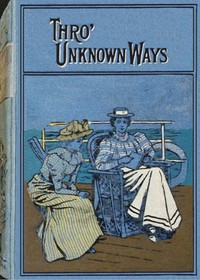
The source record for Through unknown ways — Context and Discussion measures this digital text at 105,927 words, 7 hr 41 min estimated reading time, and 9 detected text sections.
The text analysis averages about 15.3 words per sentence, while the detected sections provide another way to judge how the source is divided.
Project Gutenberg metadata also associates the work with “Historical fiction,” connecting these edition facts with the source record’s subject description.
Explore this collection
These alternatives are selected using recorded categories and estimated reading time.
About 457 minutes
Historical Psychological Social Fiction
104,900 recorded words. 4 minutes difference from this book's estimate.
View Gutenberg source #75852About 387 minutes
Historical Psychological Social Fiction
88,802 recorded words. 74 minutes difference from this book's estimate.
View Gutenberg source #294About 337 minutes
Historical Psychological Social Fiction
77,426 recorded words. 124 minutes difference from this book's estimate.
View Gutenberg source #6437Search stored excerpts and compare books → Choose by your preferences →
Choices use stored catalog measurements. Estimates vary with reading speed. A shared category is a catalog label, not a claim that two books have the same argument or literary quality.
Search reads excerpt text stored with this catalog and links to its associated Gutenberg record. The connection is stored in the site database; this tool does not recheck that every excerpt is word-for-word identical to that external record. Excerpt search does not cover every chapter and does not verify historical publication dates.
Catalog snapshot checked: 2026-09-25. Coverage: 98 public books, 98 available source excerpts.
Calculated from edition completeness, EPUB availability, text structure and catalogue metadata. Not a user rating.
Total of 100 points, scaled to a 2.5-5.0 range. Editions with an empty description or a missing EPUB file are not scored.
Public-domain source text
The source text is kept in the dedicated reader, separate from this catalogue record and its commentary.
The diary form of Through Unknown Ways is established from the first sentence, as the narrator, Mrs. Dolly, announces her intention to “speak my mind in these pages, if nowhere else.” This declaration of candor sets the tone for a narrative that balances personal frustration with keen social observation. The opening scene—Lady Corbet discovering a purse in a cabinet—immediately reveals the power dynamics among the women: Lady Corbet’s greed, Mrs. Williams’s boldness, and Dolly’s careful self-restraint. Guernsey uses small objects—a ribbon, a purse, a portrait—to hint at past lives and present tensions, a technique that recurs throughout the excerpts.
The narrator’s voice is distinctive for its blend of defiance and caution. She begins by correcting herself mid-sentence: “Lady Corbet, my mistress (I suppose I ought to say mine ‘honored’ mistress, but I sha’n’t).” This parenthetical rebellion establishes a pattern of self-editing that runs through the diary. Dolly frequently interrupts her own thoughts, as when she writes “there I go again” after calling herself a “general butt for ill-humors.” These asides create an intimacy with the reader while also revealing the constraints under which she writes. The diary is a private space where she can speak freely, yet even here she checks herself, suggesting that the habit of self-censorship is deeply ingrained. Guernsey thus uses the diary form not merely as a framing device but as a means of dramatizing the tension between inner feeling and outward compliance.
Throughout the excerpts, objects carry emotional and narrative weight. The rose-colored ribbon “still fresh and pretty, and smelling of roses” belongs to the dead Lady Jemima, whose portrait by Lely hangs in the parlor. Lady Corbet seizes the purse but dismisses the ribbon as a “fallal,” while Mrs. Williams pointedly notes that the dead woman left “not quite every thing” behind. Later, in Exeter, the narrator describes the “brown and faded” prints with “tarnished gilt frames” that she and Betty begged from their aunt, along with “odds and ends of china and carving.” These details do more than furnish the setting; they signal the narrator’s sensibility and her resistance to her aunt’s utilitarian impulses. Guernsey uses such objects to create a layered sense of the past—both personal and historical—without resorting to exposition.
The description of the garden in Exeter is one of the most carefully composed passages in the excerpts. It is divided into two parts: the formal Dutch garden with “yew-trees clipped into the shape of peacocks and dragons and a rampant St. George on horseback,” and the wilder area beyond, with “green, mossy walks, and tall trees, and a great bank of violets.” The narrator explicitly prefers the latter, calling it “the beautiful part.” This preference aligns with her earlier resistance to rigid social forms. The garden also contains a practical element—bee-hives and medicinal herbs—that connects to the memory of her uncle, a chemist and botanist. The contrast between the clipped, artificial shapes and the natural growth mirrors the tension between the narrator’s constrained social role and her inner desire for freedom. Guernsey embeds this thematic contrast in a concrete, sensory description.
Guernsey anchors the story in the 1680s not through grand historical events but through the rhythms of daily life. The narrator notes that her uncle “hunts and shoots and attends to his farming,” that her aunt oversees “housekeeping and her dairy,” and that the family visits “the bishop’s family and the other dignified clergy of Exeter.” The mention of “the roads are so bad” in winter is a small but telling detail that evokes the period’s material conditions. The diary entries are dated precisely—December 10, 1684; August 1, 1685; 1687—and the narrative moves from London to Exeter, with references to the Duke of Monmouth and Lord Chesterton’s school building project. Yet the political turmoil remains in the background, filtered through the narrator’s personal concerns. This oblique treatment of history is a deliberate authorial choice, focusing attention on how larger events impinge on individual lives.
Readers attentive to the diary’s small rebellions—the interrupted sentences, the ironic asides, the careful descriptions of rooms and gardens—will find a narrative that resists easy categorization. Guernsey’s novel rewards those who read slowly, noticing how a ribbon or a clipped yew tree can carry the weight of a character’s unspoken desires. The diary form invites us to watch the narrator watching herself, a double perspective that gives the story its particular tension.
That rainy afternoon, Guernsey’s diary-keeper made me feel the weight of waiting—how rooms hold secrets while people watch doors. Her quiet constraint stayed with me, and later, almost by accident, I found myself in a sunnier voice, one that still knew that ache of belonging somewhere hard. It reminded me of Laddie: A True Blue Story — Inside the Classic—another story where home means learning its unspoken rules.
A brief reflection can help important ideas stay with you longer.