About 461 minutes
Through unknown ways — Context and Discussion
Historical Psychological Social Fiction
105,927 recorded words. 4 minutes difference from this book's estimate.
View Gutenberg source #76453
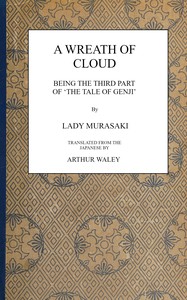
A wreath of cloud — Key Ideas to Explore can be approached with a clearer sense of reading commitment from its source measurements: 104,900 words, 7 hr 37 min estimated reading time, and 22 detected text sections.
The text analysis averages about 23.1 words per sentence, while the detected sections provide another way to judge how the source is divided.
Project Gutenberg metadata also associates the work with “Psychological fiction,” connecting these edition facts with the source record’s subject description.
Explore this collection
These alternatives are selected using recorded categories and estimated reading time.
About 461 minutes
Historical Psychological Social Fiction
105,927 recorded words. 4 minutes difference from this book's estimate.
View Gutenberg source #76453About 387 minutes
Historical Psychological Social Fiction
88,802 recorded words. 70 minutes difference from this book's estimate.
View Gutenberg source #294About 337 minutes
Historical Psychological Social Fiction
77,426 recorded words. 120 minutes difference from this book's estimate.
View Gutenberg source #6437Search stored excerpts and compare books → Choose by your preferences →
Choices use stored catalog measurements. Estimates vary with reading speed. A shared category is a catalog label, not a claim that two books have the same argument or literary quality.
Search reads excerpt text stored with this catalog and links to its associated Gutenberg record. The connection is stored in the site database; this tool does not recheck that every excerpt is word-for-word identical to that external record. Excerpt search does not cover every chapter and does not verify historical publication dates.
Catalog snapshot checked: 2026-09-25. Coverage: 98 public books, 98 available source excerpts.
Calculated from edition completeness, EPUB availability, text structure and catalogue metadata. Not a user rating.
Total of 100 points, scaled to a 2.5-5.0 range. Editions with an empty description or a missing EPUB file are not scored.
Public-domain source text
The source text is kept in the dedicated reader, separate from this catalogue record and its commentary.
Arthur Waley's translation of A Wreath of Cloud, the third volume of The Tale of Genji, sustains the intricate social choreography that defines Murasaki Shikibu's eleventh-century narrative. The prose moves between formal court speech and the intimate, sometimes awkward exchanges of characters navigating rank and desire. Waley's English renders the original's layered politeness and oblique emotional cues without flattening them into modern colloquialism.
The excerpt from the pilgrimage episode illustrates how the narrative builds dramatic irony through restricted point of view and physical detail. Tamakatsura's party is displaced by Ukon's, yet neither side immediately recognizes the other. The description of luggage, liveries, and the priest's consternation creates a scene where status is performed and misread. Such moments reveal the author's interest in how people present themselves and how easily appearances can deceive.
Waley's translation preserves the formal registers that mark social hierarchy. When the priest addresses the old serving-women, his indignation is rendered in a tone that mixes authority with exasperation: 'Be off with you at once! Just fancy, without so much as a “by your leave”!' The phrase 'by your leave' signals a code of politeness that the intruders have breached. Later, Bugo no Suke's apology for poorly served food—'Tell her I am very sorry it is so badly served; but I have done the best I can'—reveals his awareness of the gap between his own station and that of the lady he serves. The diction here is not merely decorative; it maps the invisible lines of rank that characters constantly negotiate.
Characters rarely state their feelings directly. Instead, emotion emerges through reported speech, physical description, and the reactions of others. When Ukon peeps through the partition, the narrative withholds her recognition of Bugo no Suke, noting only that 'she had the impression that she had seen the young man before.' The reader shares her uncertainty. The text then explains why recognition fails: 'he was a mere child when she last saw him, while now he was a full-grown man, much bronzed from exposure to the sun and winds of Tsukushi, and dressed in the poorest clothes.' This delayed revelation mimics the process of memory and inference, a technique that Murasaki uses to create psychological depth without explicit interior monologue.
The pilgrimage scene is built on a series of misrecognitions and reversals. Tamakatsura's party, though of high rank, is displaced by Ukon's, which appears more modest. The priest's assumption that the newcomers are 'of such rank and consequence' proves unreliable. The narrative emphasizes the difficulty of reading social status: the new arrivals 'concealed themselves scrupulously from the gaze of their fellow-guests and hardly spoke to one another at all.' This opacity is a structural principle in the novel. Characters are often misidentified, their true identities hidden by clothing, circumstance, or deliberate concealment. The scene thus functions as a microcosm of the larger work's concern with perception and reality.
The inn at the Hasegawa Shrine is rendered through sensory and spatial details that ground the social drama. The 'thin partition of plaited reeds' allows sound to pass, enabling Ukon to overhear the exchange. The description of the ladies 'with their skirts tucked in at the belt like country-women' and attended by 'two aged crones who looked like broken-down charwomen' creates a vivid contrast between their actual status and their appearance. The priest 'scratching his head in great perplexity' adds a touch of comic frustration. These details are not mere background; they shape the plot, as the physical layout of the inn determines who overhears whom and sets the stage for recognition.
Readers approaching A Wreath of Cloud will find that its pleasures lie in the accumulation of small, telling details rather than in dramatic plot turns. Pay attention to what characters do not say, to the objects they carry, and to the spaces they occupy. Waley's translation, while a product of its own era, remains a careful rendering of a work that rewards slow, attentive reading. The volume stands as the penultimate part of the Genji narrative, leading toward the Uji chapters that follow Genji's death.
That rainy afternoon I kept returning to the stillness of Waley’s court, where every glance held a dozen unspoken rules, until the layered silences felt like rooms. Later, half-dreaming, I stumbled upon another book that unpacked those very mechanics—how meaning hides between lines. Round Robin — Text and Context felt less like a sequel and more like a quiet key left in the lock.
Use these questions to collect your thoughts before moving on.