About 206 minutes
The old house in the city — A Closer Reading
Fantasy Juvenile Worlds
47,365 recorded words. 9 minutes difference from this book's estimate.
View Gutenberg source #73596
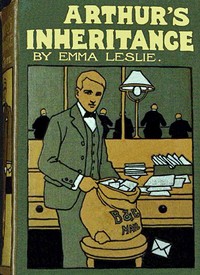
This digital edition of Arthur's inheritance — Background and Themes is described by source-level measurements including 49,440 words, 3 hr 35 min estimated reading time, and 5 detected text sections.
The text analysis averages about 17.2 words per sentence, while the detected sections provide another way to judge how the source is divided.
Project Gutenberg metadata also associates the work with “Conduct of life -- Juvenile fiction,” connecting these edition facts with the source record’s subject description.
Explore this collection
These alternatives are selected using recorded categories and estimated reading time.
About 206 minutes
Fantasy Juvenile Worlds
47,365 recorded words. 9 minutes difference from this book's estimate.
View Gutenberg source #73596About 203 minutes
Fantasy Juvenile Worlds
46,670 recorded words. 12 minutes difference from this book's estimate.
View Gutenberg source #73340About 199 minutes
Fantasy Juvenile Worlds
45,664 recorded words. 16 minutes difference from this book's estimate.
View Gutenberg source #72840Search stored excerpts and compare books → Choose by your preferences →
Choices use stored catalog measurements. Estimates vary with reading speed. A shared category is a catalog label, not a claim that two books have the same argument or literary quality.
Search reads excerpt text stored with this catalog and links to its associated Gutenberg record. The connection is stored in the site database; this tool does not recheck that every excerpt is word-for-word identical to that external record. Excerpt search does not cover every chapter and does not verify historical publication dates.
Catalog snapshot checked: 2026-09-25. Coverage: 98 public books, 98 available source excerpts.
Calculated from edition completeness, EPUB availability, text structure and catalogue metadata. Not a user rating.
Total of 100 points, scaled to a 2.5-5.0 range. Editions with an empty description or a missing EPUB file are not scored.
Public-domain source text
The source text is kept in the dedicated reader, separate from this catalogue record and its commentary.
The novel opens with Arthur announcing he has found a place at a shop, to the dismay of his sisters Annie and Molly, who gasp at the idea of a 'fal-lal shop and a tailor's shop.' This immediate tension between Arthur's practical step and his family's expectations sets up a central conflict about class and respectability. The sisters' reactions—Annie's grave concern and Molly's affectionate scolding—reveal a household shaped by recent bereavement and financial strain, as Arthur mentions his father's death has 'changed everything.'
The excerpts portray a family navigating reduced circumstances after the father's death. Arthur's mother is referred to as 'the Mater' and is shielded from worry; his sisters sew at home and urge caution. Arthur's decision to take a shop job without consulting old family friend Mr. Best shows his impatience with waiting for something to 'turn up.' The sisters' protests—'We cannot afford to offend old friends'—highlight the social tightrope they walk. Later, a cabman recalls driving Arthur's father 'many a time' when 'money weren't no account to the Murrays,' underscoring the family's fallen status. The catalog subject 'Fatherless families' is clearly present, but the excerpts emphasize the family's active negotiation of pride and necessity rather than passive victimhood.
Arthur speaks with a mix of bravado and self-awareness. He jokes about being a 'bad boy' and compares waiting for a position to Mr. Micawber's optimism. When he returns home with a black eye from a fight with his cousin Adrian, he tries to downplay it—'I shouldn't do for a beauty-show just now'—and insists on going to work despite his injuries. His plan to hide his face with a handkerchief and pretend toothache shows resourcefulness. The catalog subject 'Teenage boys' fits, but Arthur is not merely a generic boy; he is a character who makes decisions and faces consequences, from choosing a shop job to handling a drunken relative.
The shop job is a source of shame for Arthur's sisters, who associate it with a fall in status. Arthur himself calls it a 'fal-lal shop,' suggesting he is aware of its low prestige. Yet he defends his choice as necessary. The cabman's offer of a free ride—'if you like to consider that this here journey was paid for in them old days'—bridges past wealth and present need. The catalog subject 'Clerks' appears in the chapter title 'A Start in Life' and in Arthur's reference to the 'counting-house,' but the excerpts show him working in a shop, not a clerical role. This discrepancy suggests the catalog may oversimplify the work's depiction of employment.
Readers should note that the excerpts cover only the early chapters, focusing on Arthur's home life and his first conflict with his cousin. The catalog subjects 'Debt' and 'Conduct of life' are hinted at but not yet developed. The novel's full arc may explore Arthur's inheritance—literal or figurative—and his 'conquest' of adversity, but the text so far emphasizes immediate family negotiations and Arthur's own choices rather than moral lessons.
That rainy afternoon, Arthur’s quiet defiance—choosing a shop against his family’s wishes—stayed with me longer than the black eye. It made me think of childhood rules we inherit without questioning, and how softly they bind us. Later, I found myself reaching for something else that wondered at quiet rebellion. The barbarous babes — Key Ideas to Explore felt like a natural next whisper, not a lesson, just another window on the same old rain.
A brief reflection can help important ideas stay with you longer.